
You’d not think so, but we all dread that one day on a vacation.
There’s the initial emotional build-up that comes with the idea of a vacation, and it starts long before the vacation itself. We are all familiar with the strain it takes even to get the days sorted amidst the busy schedules. We have even coined the idea of the trip never leaving the group chat, so when it does, we want to maximise the moment.
And finally, once we’ve had the tickets booked, the flights taken, and we’ve had the pleasantries, we wish it never comes to an end. And as the week comes to a close, the looming gloom of reality starts to set in. Yes, we might love our jobs, and actually enjoy spending time on our creative projects, but there’s something about an afternoon in the Maldives, drinking a mimosa as the afternoon sun shines down on you, that hits different.
The rush of the city could never compare. And as the last day hits, it starts to feel suffocating. You start having the most dream-worthy conversations. Once, a friend asked if they could pack the entire beach in their bag and carry it back to the apartment block they lived at. We laughed it off but understood the sentiment.
Some modern jobs have created remote working experiences, but still nothing matches the serenity of vacation. Your apartment table doesn’t feel the same as the lobby of a five-star resort, with the concierge getting you a glass of juice whenever you need it, and yes, you didn’t carry your kids on your getaway, so their running around is still something remote work can’t escape.
But what if there was a way to carry that resort in your pocket, aboard a flight to Kampala, and have it planted? This is the idea behind a new generation of luxury apartments and real estate developments changing how people live in the city.
Escape inside Kampala
When a company like Marriott decides to enter a city, it is worth paying attention.
On 27 August 2026, President Yoweri Museveni officially opened the Kampala Marriott Hotel and Marriott Executive Apartments in Nsambya. For Kampala, it was another major international brand putting its name, money and reputation behind the city.
Marriott is one of the biggest hotel companies in the world, with more than 10,000 properties across 148 countries and territories. A company of that size does not choose a new market casually. Before opening its doors, it looks at tourism, business travel, future demand and the wider economy.
In Uganda, Marriott saw enough to make the move.
Johan Cronje, Marriott’s Regional Vice President for Sub-Saharan Africa, linked the decision to Uganda’s growing tourism industry and increasing demand from business travellers. He described the move as part of Marriott’s long-term commitment to Uganda and its confidence in the country’s economic and tourism potential.
For the average person, the arrival of another hotel may not seem like a big deal, but for someone looking at Kampala as a place to invest, however, it says something important about where the city is heading. It is clear that Marriott is not simply bringing another hotel to Kampala; it is responding to a growing group of people who need somewhere to stay, work and live while they are here, and that is where the story becomes interesting for residential property.
To understand why Marriott’s arrival matters, it helps to look beyond Uganda.
You don’t have to travel to find a resort
Across Africa, international hotel brands are expanding quickly as more people travel to the continent for business, tourism and investment. Hotel developers are responding to growing demand for accommodation that meets the standards international travellers are used to.
Uganda is part of that wider story; it welcomed more than 1.6 million international visitors in 2025, up from about 1.37 million the year before, with tourism generating around $1.62 billion during the year and supporting hundreds of thousands of jobs. Behind those numbers are real people arriving in Kampala for different reasons. Some come for business, while others are working on long-term projects. Others are diplomats, consultants, executives or employees of international organisations.
Many of them are not here for a weekend; they may be here for several months or even several years, and that creates a different kind of demand. They need somewhere that feels comfortable for an extended stay; somewhere secure, well managed and close to the places they need to be. And increasingly, they are looking for something that feels less like a hotel room and more like a home.
That is one reason the arrival of Marriott is significant for Kampala’s residential market.
Luxury, tranquillity, and warmth
This is where The Bridge Kololo fits into the picture, offering some of the most distinctive apartments for sale in Kampala for buyers looking for lifestyle, convenience and long-term value.
The idea behind The Bridge is relatively simple: what if you didn’t have to leave home to feel like you had escaped?
The Bridge was conceived around a philosophy its designers call “escape within”, the conviction that instead of needing to travel somewhere else to find relaxation, restoration, and community, those experiences should be built into your regular day.
That sounds simple. It is, in practice, one of the hardest things a residential developer can actually deliver because most buildings are designed around floor plans and price points, with amenities assembled afterward as a supporting cast.
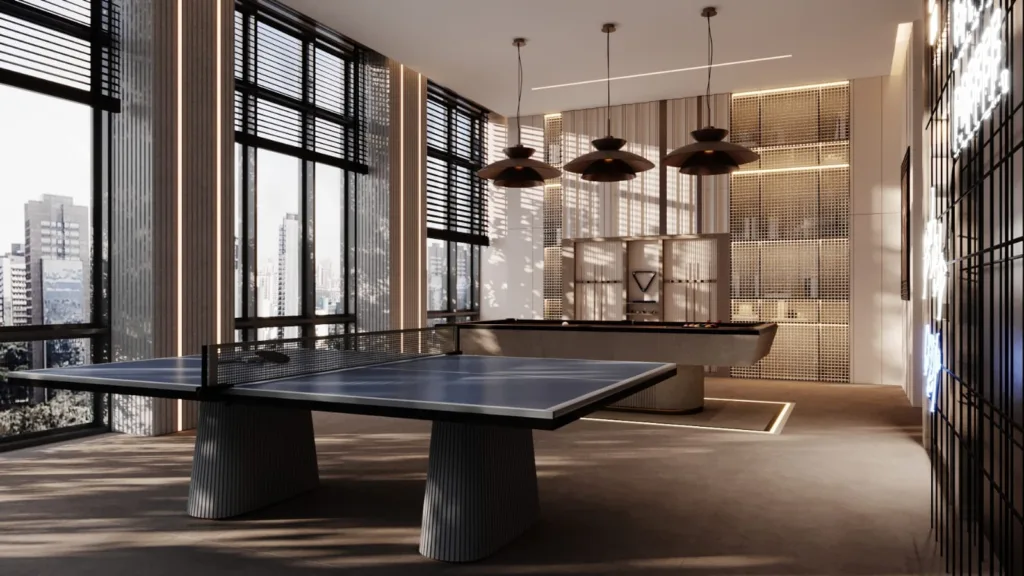
The Bridge, however, inverted that sequence. The 25 curated lifestyle amenities were designed first, as the infrastructure around which the apartments were built, not features added to an existing structure. That distinction shapes everything from the building’s circulation to the relationship between its shared spaces and its private ones.
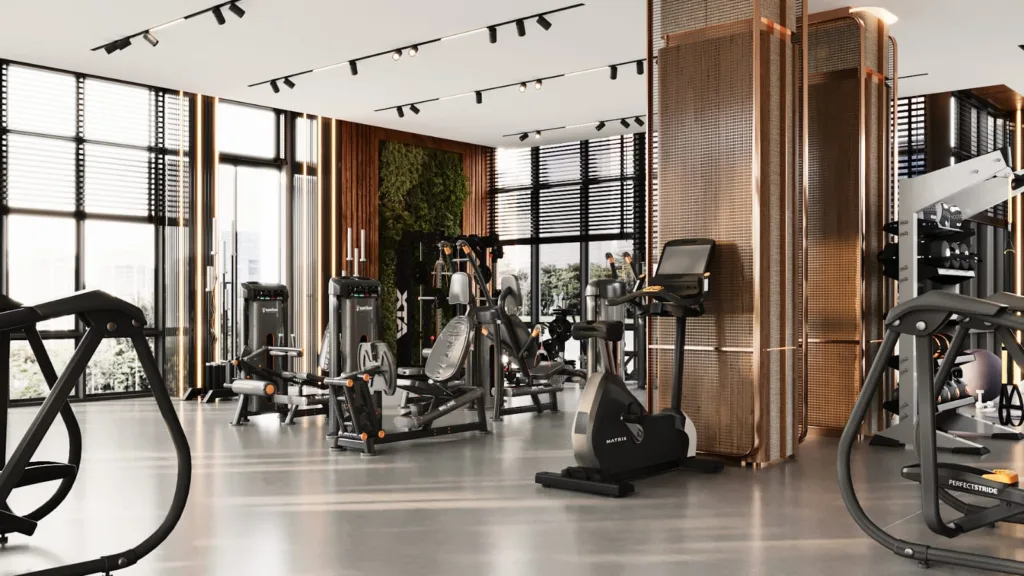
And twenty-five lifestyle amenities! That is meant to sound impressive, but the number alone doesn’t tell you much: a lot of developers usually use big numbers to make a building sound luxurious. What makes The Bridge different is that the amenities weren’t added just to make a long list; they were considered from the beginning, and the building was designed around how people would actually use them.
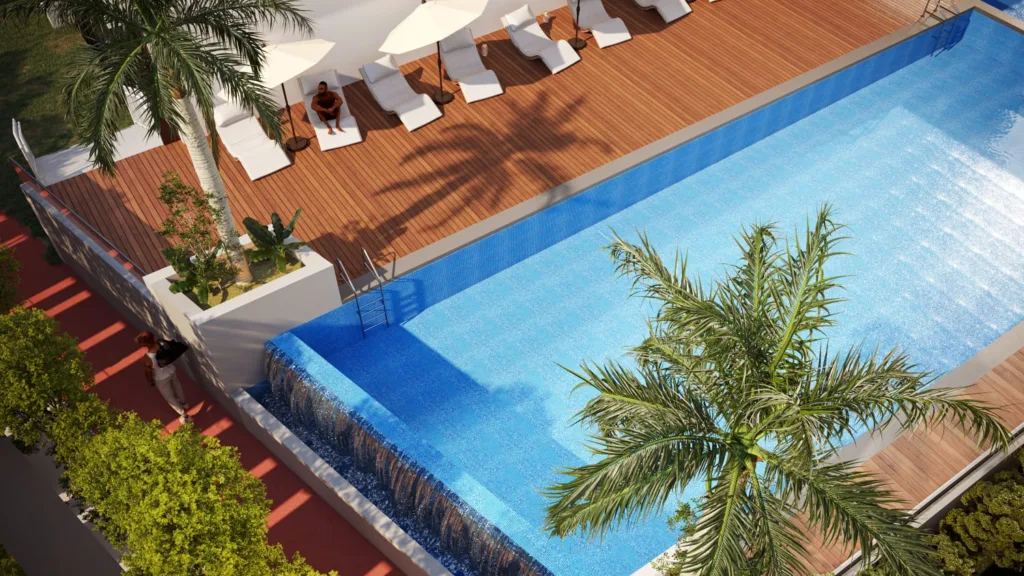
The heated swimming pool is a good example. A pool can make a building feel more like a resort, but at The Bridge, it’s not something you have to travel across Kampala to enjoy. It’s right where you live. You can take a swim after work, spend time with the family on the weekend, or simply sit by the water and switch off for a while; it’s part of everyday life in the building.
Then there’s the rooftop sunset deck; this is the kind of place you might find yourself using without even planning to. Maybe it’s where you end a long day, have a drink with friends, or sit and talk when you need a change of scenery and with views across Kampala’s green hills and the water beyond, the setting does a lot of the work. You don’t need much else.
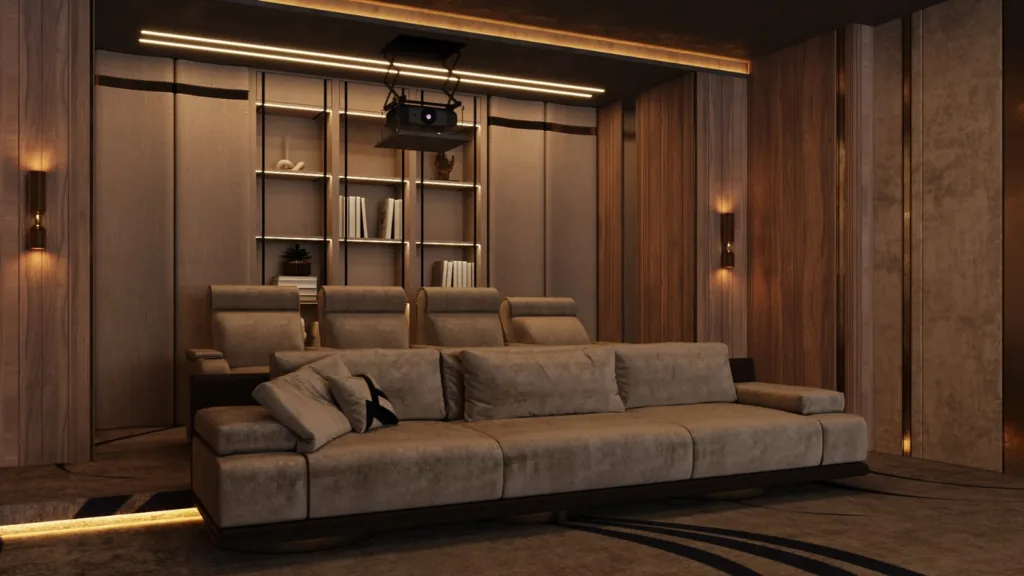
The private cinema brings another experience into the building. Instead of getting in the car and heading to the cinema, you can watch a movie properly without leaving home. For families, it gives you somewhere to spend a Saturday evening together; for couples, it makes staying in feel like an occasion, and if you’re hosting friends, you have another space to use beyond your apartment.
The co-working spaces are designed for people who work from home but don’t necessarily want to work from their living room. You can step out of your apartment, get your work done in a proper workspace, and then go back home when the day is over. It’s a simple idea, but having a clear separation between work and home can make a big difference.
And then there’s the skybridge. It may not be the most practical amenity in the building, but it might be one of the most memorable; it gives you a completely different view of Kampala. Instead of looking at the city from the ground, you’re looking out over it. You might be there on a Wednesday morning with a coffee, watching the city move below you and the light change across the horizon.
That’s really what the amenities at The Bridge are about. Not simply having 25 things to put on a brochure, but creating more ways to live, work, relax and spend time without having to leave home.
Visit our showhouse at Plot 1 Katonga Road, Nakasero, to explore some of the finest luxury apartments, discover apartments for sale in Kampala, and learn more about properties for sale in Uganda. Call +256 765 500 000 to make a never-ending holiday yours.
FAQs
1. What makes The Bridge Kololo different from other apartments in Kampala?
The Bridge Kololo is designed around a resort-like lifestyle, with 25 curated amenities, including a heated swimming pool, private cinema, coworking spaces, a rooftop sunset deck and a skybridge.
2. Can you live in a resort-style apartment in Kampala?
Yes. The Bridge Kololo is designed to bring the comfort and experiences of a resort into everyday residential life, allowing residents to swim, work, relax, entertain and socialise without leaving the building.
3. Why are hotel-style amenities becoming important in residential properties?
As more professionals, executives, expatriates and long-term visitors look for comfortable places to live in Kampala, residential properties are increasingly expected to offer more than just an apartment. Services, amenities, security and convenience can make long-term living more comfortable.
4. What amenities does The Bridge Kololo offer?
The Bridge has 25 lifestyle amenities, including a heated swimming pool, private cinemas, coworking spaces, a rooftop sunset deck and a skybridge offering views across Kampala.
5. Why is Marriott’s arrival in Kampala important for the property market?
Marriott’s arrival reflects growing demand from international travellers, business professionals and long-term visitors to Kampala. This creates opportunities for residential properties that can offer the comfort, convenience and quality these groups increasingly expect.
