
If you have spent enough time looking at property in Uganda, you eventually learn that the market is not always as simple as it looks.
You can research property prices, compare locations, look at rental income, follow market reports and calculate your expected return, but then you start talking to people in the industry, and things become ambiguous.
One person gives you one price, another gives you a different one; one tells you a property is a great investment, another tells you to wait. You may find a developer selling one type of property, an agent selling several different properties, and a property manager who will eventually be responsible for looking after the apartment you buy.
So who do you trust? But even more importantly, how do you know what you are actually buying?
Yes, Uganda’s property market has a real opportunity. Property prices have been rising, the population is growing and demand for good housing continues to increase, but a growing market does not automatically mean every property is a good investment.
The difference often comes down to how well you understand the people, companies, costs and processes behind the property.
That is what this article is about: not just the property but also the market behind it.
What Is Actually Happening in Uganda’s Property Market?
Let’s start with the big picture.
According to the market figures referenced for 2026, property prices in Uganda are growing faster than general inflation. Property prices have been rising by about 9.2% a year, while inflation is around 3.1%. In simple terms, property has been gaining value faster than the general cost of goods and services; hence, one of the reasons property remains attractive to investors.
But there is an important point here. Prime areas like Kololo and Nakasero behave differently. Here, the story is not simply about fast price growth. It is also about limited land, location and demand from people who want to live close to Kampala’s business, diplomatic and commercial centres.
It is clear that Kampala continues to grow, and more people want to live closer to where they work, especially as commuting becomes more difficult.
The four kinds of real estate company in Uganda — and which one you need.
One of the easiest mistakes to make is to treat every property company as if it does the same job; it doesn’t. There are different types of companies in the property business, and understanding the difference can save you a lot of trouble.
1. The Agent or Broker
This is probably the person you are most likely to meet first: an agent who connects buyers with properties and most usually has properties from several developers, landlords and property owners. Agents usually earn a commission when a sale is completed, which ranges from 2% to 5%, depending on the arrangement. The upside is a good agent can be extremely useful: they know the market, know what is available and can help you negotiate.
But you should also remember something important: the agent is not necessarily the person responsible for the property you are buying; their job is to help you find and buy it, so you still need to do your own checks.
2. The Property Manager
A property manager comes into the picture before or after you buy; their job is to look after the property. They may collect rent, deal with tenants, organise maintenance and report to the owner, and this becomes especially important if you are buying as an investment.
You may buy a beautiful apartment, but if the property is badly managed, finding tenants, collecting rent and maintaining the property can become a headache. For someone living abroad, good property management becomes even more important because you cannot simply drive over to check the apartment yourself.
3. The Developer
The developer is the company responsible for building the property.
Most importantly, this is the company you should be paying close attention to when buying off-plan. This is because you understand that you are not just buying an apartment; you are trusting the developer to turn what you see in a brochure, floor plan or 3D render into a real building.
4. The Developer That Also Manages the Property
In Uganadan real estate, most developers build a property, sell the units and walk away, while a few others stay involved after handover and manage the building. This means the same company has an interest in what happens to the property after people move in.
For an investor, this can be useful because the company is not only interested in selling the apartment, but it also has a reputation to protect after the sale, and that matters when you are thinking about tenants, maintenance, the condition of the building and the long-term value of your property.
Real estate companies in Kampala vs the rest of Uganda
This is one area where buyers should never rely only on what someone tells them; always check.
Here are three simple places to start.
Check 1: URSB
Check whether the company is registered with the Uganda Registration Services Bureau. Start by asking for the company’s registration details and verify them. You want to know that the company you are dealing with actually exists as a registered business.
Check whether the company is listed with AREA-Uganda if it claims membership. This gives you another way to establish who you are dealing with.
Check 2: URA
Ask for the company’s tax identification details where appropriate and make sure the business is operating as a proper tax-paying entity.
Check 3: Look at what they have actually done
This is probably the most useful check of all. Ask about their completed projects, and don’t just look at pictures; visit them. If they say they have completed a building, find the building, and talk to people who have bought there if you can. A company can make a very convincing promise, but a completed building is much harder to fake.
An 8-point checklist before you sign with any Ugandan property firm
Before you sign anything, make sure you can answer these eight questions.
1. Have they completed a building before?
If they have, go and see it and if they haven’t, understand that you are taking on more development risk. That does not automatically make the investment bad, but you should know the risk you are accepting.
2. Is the company registered?
Ask for its URSB registration details and verify them.
3. Is the property title clean?
Carry out the necessary title searches and checks. Don’t simply accept, “The title is fine,” go ahead and verify it.
4. Who will manage the property?
Find out who will deal with tenants, maintenance, rent collection and the day-to-day running of the property.
5. How are payments linked to construction?
For an off-plan property, understand what you are paying for and when. A payment plan spread through the construction period can give the buyer more comfort than simply being asked for payments randomly.
6. How will the property be registered in your name?
Understand whether you are buying a condominium title, leasehold interest or another form of ownership and do not use a nominee simply because someone tells you it is easier.
7. What will the property really cost me?
The price on the brochure is not always the final amount you will spend; you may have stamp duty, legal fees, registration fees, valuation costs and other charges. Ask for a full breakdown before you commit.
8. Has an independent lawyer reviewed the deal?
This one is simple: he developer’s lawyer works with the developer, while your lawyer works for you. Have your own lawyer review the agreement and the property documents before signing; it is one of the simplest ways to protect yourself.
What property costs in Uganda in 2026
There is no single answer.
It depends on where you want to buy, what you want to buy and whether you are looking at the purchase price alone or the full cost of buying.
For example, in prime areas such as Kololo and Nakasero, one-bedroom condominiums can range from about $130,000 to $250,000, while in areas such as Ntinda, Naalya and Butabika, the same may range from around $40,000 to $90,000.
In emerging areas such as Kira, Namugongo and Gayaza, properties can range from about UGX 150 million to UGX 700 million. Apartments in prime central Kampala can start from around $85,000, depending on the development and unit.
Where VAAL Real Estate fits
This is where the conversation comes back to the company behind the property.
If you are considering buying from a developer, one of the most useful questions you can ask is, ‘What have you built before?’
VAAL brings experience from markets across Africa, including more than 2000 units constructed in 4 African countries, including Kenya and Ghana.
And this is important because property development isn’t as easy as words spoken, i involves buying and preparing land, designing buildings, managing contractors, dealing with approvals, handling buyers and eventually managing completed properties.
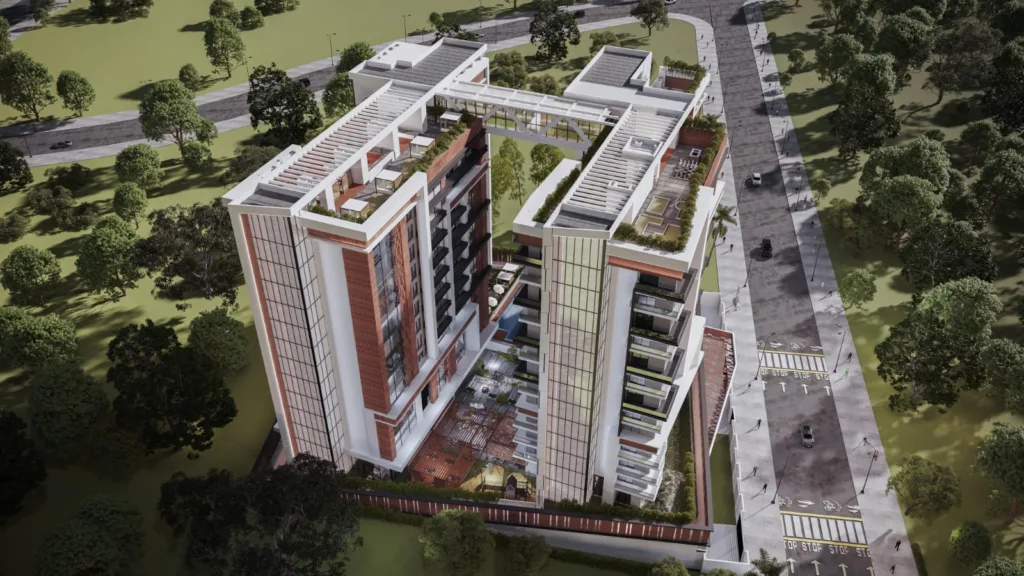
In Uganda, VAAL’s developments include two projects in Kampala. Cadenza Residence in Nakasero is planned as the nation’s residential tower, rising more than 80 metres above Kampala with 25 storeys.
The Bridge in Kololo consists of two residential towers connected by a skybridge, with facilities designed around the idea of bringing more of the resort experience into everyday apartment living. Both projects are being developed with VAAL’s property management system as part of the long-term plan for the buildings.
A worked example: the full purchase cost of a Cadenza Residence apartment
There isn’t one fixed price for every apartment at Cadenza; the price depends on the type of apartment, the floor it is on, and the view it offers. So a studio on a lower floor will not necessarily cost the same as a studio on a higher floor with a better view. The easiest way to understand the cost is to speak to the sales team about the specific apartment you want and get the current price for that unit.
The payment plan is designed to spread the cost over the construction period; you start with a 30% deposit to secure your apartment. The remaining 70% is then paid over the construction period, giving you time to complete the purchase as the building progresses.
The bottom line is buying property is a big decision, and there is a lot more to it than finding an apartment you like and paying the deposit.
You need to understand the market, the company you are buying from, the property itself, the costs involved and what happens after you get the keys.
Reach out to us on 0765 500 000 and let’s walk through the journey to owning property together.
FAQs
1. What should I look for when choosing a real estate company in Uganda?
Look at the company’s registration, completed projects, property management arrangements, payment structure, ownership documents and overall track record. For off-plan property, the developer’s ability to actually deliver the building is especially important.
2. What is the difference between a property developer, agent and property manager?
A developer builds the property, an agent helps buyers find and purchase property, while a property manager handles the property after purchase, including tenants, rent collection and maintenance. Some developers also provide property management after handover.
3. How can I verify a real estate company in Uganda?
Start by checking its registration with URSB and, where appropriate, its tax details with URA. You can also check claimed AREA-Uganda membership and, most importantly, visit the company’s completed projects to see what it has actually delivered.
4. What should I check before buying property in Uganda?
Check whether the developer is registered and has a proven track record, whether the property title is clean, who will manage the property, how payments are linked to construction, how ownership will be registered and what additional costs you will incur. Have an independent lawyer review the agreement before signing.
5. How much does property cost in Uganda in 2026?
Property prices vary significantly by location and property type. In prime areas such as Kololo and Nakasero, one-bedroom condominiums can range from about $130,000 to $250,000, while similar units in areas such as Ntinda, Naalya and Butabika may range from around $40,000 to $90,000.
