
In Part 1, we talked about the feeling of disappointment no investor wants to have and the two questions that, asked properly, prevent that heartbreak from ever happening: the price and the company behind it.
We left off with a price that’s been verified and a payment plan negotiated and a developer that’s passed the only test that really matters: proof of delivery, not promises of it.
But even the most trustworthy developer in the world can’t manufacture value out of a bad address. So now we move to the three questions that decide whether your investment merely survives or genuinely thrives: the location, the amenities, and, finally, the number everyone wants to ask about first, but really shouldn’t.
The Location

The deep-pocketed tenants of Kampala (the diplomats, multinational executives, and the people whose housing allowances could basically settle them comfortably wherever they might please, regardless of how ridiculous the price sounds) are leaving Kololo and Nakasero. That’s a tough thing to say, but that’s happening behind the scenes.
Knight Frank tracked this and outlined it plainly in their report. They noticed significant relocation of these high-net-worth rent payers to secondary prime suburbs like Upper Naguru and areas toward Muyenga and Munyonyo, within a 5–10-kilometer radius of the old core areas. And it’s not why people think it is.
Kololo and Nakasero aren’t losing their appeal. If anything, the things that made them special are still standing strong and even expanding in that regard. These areas remain home to the highest concentration of embassies, government institutions, and international schools in the country, which makes them the shortest commute to the diplomatic and corporate core, with a deep sense of institutional security and access that no new suburb can replicate overnight. It takes more than a few fancy buildings to do that.
But somehow, the residential capabilities of these areas are taking their time to match up. Kololo, over the past 20 years, has been heavily dominated by old semi-detached houses on most plots that have become offices, and even the apartment blocks available are either old or do not have the lifestyle features to match the expectations of global tenants used to such conveniences in their residences in Johannesburg, Brussels, or Manhattan.
And what’s happening is a flight to quality within the prime zones, not away from them. The tenant who leaves a tired half-century-old apartment in Kololo for a modern, more amenity-rich alternative in Naguru isn’t rejecting the neighborhood; they are rejecting the building, or even deeper, the standard.
Give that same tenant a modern tower with the amenity stack they have grown to expect elsewhere in the world, in the same Kololo locality, and suddenly leaving is no longer even an option to be considered.
And that’s why location, for this particular segment, can’t be evaluated on the premise of proximity alone. You’d have to align it to product freshness. How appealing is this product to the segment that we are targeting? Do they find it an improvement to their life or something to complain about on a daily basis?
And in cases like Cadenza Residences and The Bridge in Nakasero and Kololo respectively, location becomes so pivotal to their success as revolutionary products in the ecosystem. They become the obvious choice for anyone with that budget in that location.
The Amenities
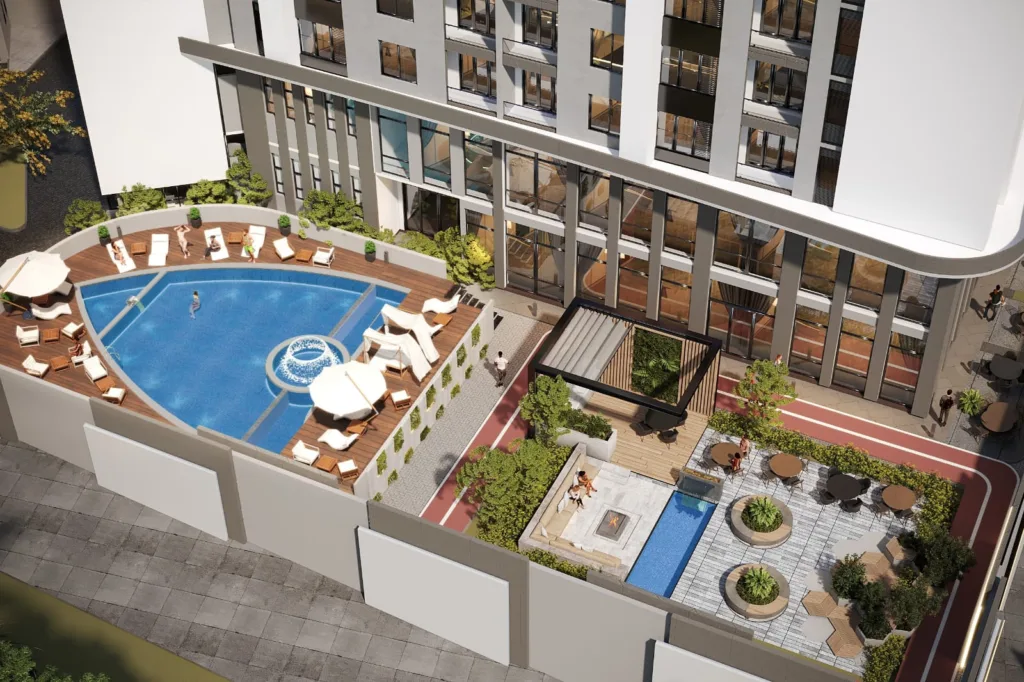
When it comes to answering the question of what these demographics are looking for, many people seem to be more confused than not and keep wondering why they receive the responses and awkward faces they get from their prospects.
You’d find a consultant rolling out a presentation, showing renders of a wonderful apartment block and, as they list features, they start to proudly list gym spaces, a swimming pool, and 24-hour security as features of luxury.
Yeah, we know. It isn’t, and not anymore. And if they knew exactly who they were selling to and what their expectations are, it would make clear sense to them as to why it isn’t such a brilliant move.
The expatriate pool they are seeking to tap into, the clear residents of areas like Upper Naguru, Nakasero, and Kololo, are overwhelmingly made up of diplomatic staff on multi-year postings, senior UN and NGO employees, and corporate executives whose housing allowances are paid by employers who already have high expectations.
They have seen what the standard looks like in Johannesburg and San Francisco and are definitely not discovering luxury for the first time. They are comparing, either consciously or unconsciously, every Kampala apartment they see against the last one they lived in somewhere else in the world.
And this is a clear indication of the basic task these amenities need to accomplish. They need to easily demonstrate that the building understands what this well-travelled client has already gotten used to expecting, so that they never have to feel like they have to compromise their standard of living just because they are spending a few months or years working in Kampala.
Just think about it from this point of view. Reliable backup power and water, which were once considered a good thing to have in most parts of East Africa, are now something not to look at as a possibility: their absence is an immediate disqualifier.
Security isn’t a guard at a gate anymore; it’s systems like video intercoms and properly staffed and trained concierge personnel because most people paying a premium rate for their accommodation have seen and heard of the peace of staying in a place with uncompromising security.
And we then start to see that what we actually call amenities have to serve a group of people who cannot mentally separate the experience of a home from their lifestyle like previous generations did.
At this stage, the heated pool isn’t an afterthought; it’s an integrated part of their wellness routine. And the business area isn’t a place of curiosity; it’s an absolute requirement for that video call that happens at 2 a.m. to catch up with colleagues who are awake in Melbourne that morning.
This is actual demand placed on the lives of people who demand this kind of living.
And with all these being nice to have, the question is: how do we justify this in monetary terms, or is it just one fairytale indulgence?
The ROI
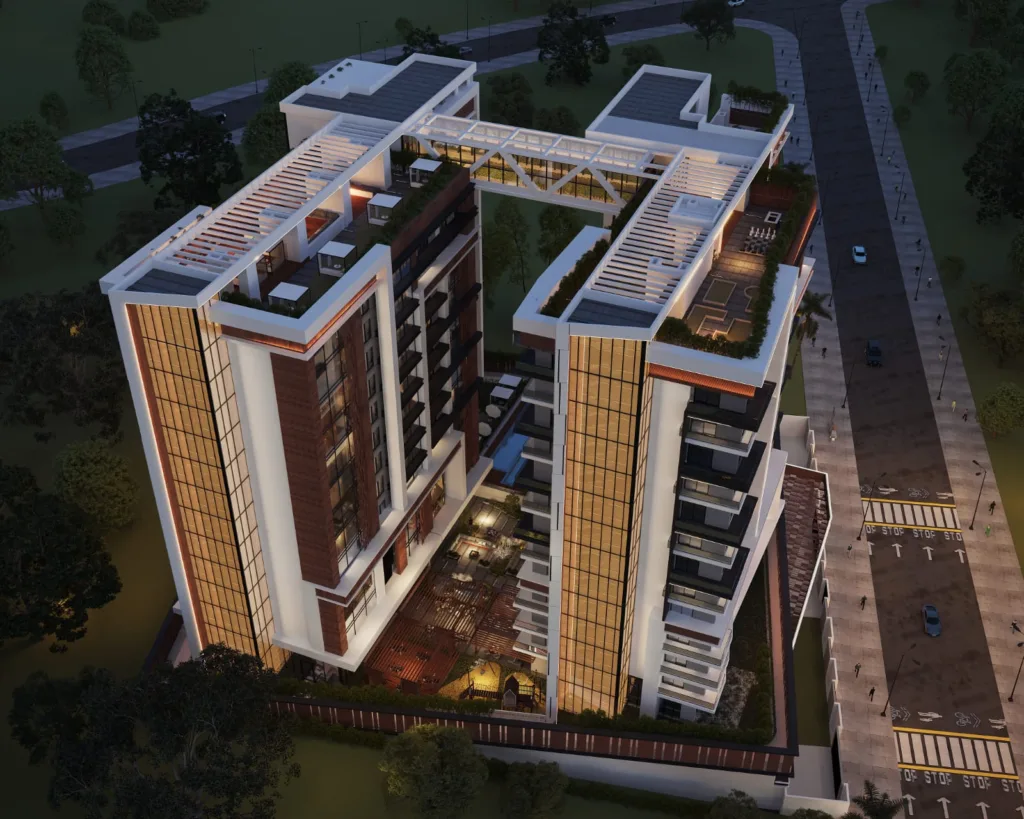
Now this is where anyone releasing their money has to ensure it all makes sense.
Because most people who know their investment math understand that sometimes the real data is much deeper than the flashy stories.
And that’s where the story of returns comes into the picture.
Take a studio at Cadenza, for example. Purchased at a prelaunch price of $72,000 and rented at $2,730 per month against prevailing market rates, the theoretical gross yield works out to an extraordinary 45.5% annually, a figure so far above the typical regional benchmark of 7–10% that it would, on its face, sound almost implausible.
Now this sounds remarkable. But we know a wise investor would delve further to ask questions like the following: What’s the occupancy rate? Who is managing the property and what experience do they have? What happens in cases where a tenant moves out and the unit is vacant for a period of time?
Because that clearly determines the difference between the theoretical numbers and what actually lands in the pocket of the investor in the end. Are those loose ends tied up?
And this is why the entirety of the backstory is important, because ROI in itself can’t be evaluated as a standalone number without acknowledging that it is a consequence of a culmination of properly placed factors.
A fair price, properly verified from the actual developers with payment plans and terms of handover agreed upon, ensures your cost of entry is low enough for you to handle comfortably. A proven developer ensures the building you’re calculating returns against actually gets completed, on time, to the standard promised. A proven location with genuine institutional demand and security ensures that you have a continuous flow of high-paying tenants. And the presence of amenities ensures you can charge a premium for your units while attracting the highest tier of clientele in the area.
And that’s the entire framework to look into before you sign any deals in condominium real estate within Kampala.
Return on investment should never be the first question. It always has to be the last.
It’s not something you should ask a sales agent in a meeting and get excited about because of a number they throw at you. It’s something that emerges, almost inevitably, once you’ve correctly put the pieces of the puzzle from the four parts above together into one unique piece.
Get the price, the company, the location, and the amenities right, in that order, and the ROI essentially takes care of itself – because you will have, without quite realising it, built a fortress of fundamentals around your capital that no single market wobble can easily breach.
Get any one of those four wrong, however, and no yield projection on any brochure will save you. It will simply be a beautifully designed number describing money you were never actually going to see.
That’s the real lesson hiding inside every story of someone who lost six figures in Ugandan real estate. It was never really about price, or location, or amenities viewed alone. It was about a sequence — a discipline — that they skipped, usually in their hurry to get to the number at the bottom of the page.
Ask the questions in order. Let the answer to each one earn the right to ask the next. And by the time you reach the ROI, you won’t be hoping it’s real. You’ll already know.
Visit our showhouse at Plot 1 Katonga Road, Nakasero or call +256 765 500 000 to see for yourself what sets The Bridge Kololo and Cadenza Residence Nakasero apart.
FAQs
1. Why is location so important in real estate investing?
Location influences everything from tenant demand and rental rates to long-term capital appreciation. Even the best-built property can struggle if it’s in the wrong area.
2. What amenities do high-end tenants look for today?
Today’s premium tenants expect more than a gym and swimming pool. Features such as reliable backup power and water, concierge services, advanced security systems, wellness facilities, and dedicated workspaces are increasingly considered essential.
3. Do amenities actually increase rental income?
Yes. The right amenities can improve occupancy rates, attract higher-quality tenants, reduce vacancy periods, and justify premium rental prices.
4. Why shouldn’t ROI be the first thing I look at?
Because ROI is the outcome of several factors working together. A strong return depends on buying at the right price, choosing a reliable developer, investing in the right location, and selecting a property that meets market demand.
5. How do I know if a location has strong long-term demand?
Look for areas supported by embassies, multinational companies, international schools, government institutions, and established infrastructure. These create a stable tenant base that can support property values over time.
