
Most people who went to school, got jobs, and are working or even those who own and run businesses, look forward to their big break.
That’s usually categorized as the time you receive some amount of money that makes retirement feel like such a great possibility, not just a far-fetched, worrisome event.
That’s either going to look like a lump sum of money you receive from a breakthrough deal, your retirement pension coming through, or the time to cash out on a savings scheme you have been part of for 15 or 20 years. Either way, there comes a point when the money you have accumulated makes you realize it is time to invest.
And for those with real estate in mind, the answer usually boils down to either land or apartment living, amongst many other options. Some people turn it into a debate about what is right or wrong to do. But we don’t do that.
Rather, we’ll show you what makes each of them special, why each has hidden advantages, and why the one you choose should be the one that works best for your long-term goals, aspirations, and investment strategy.
Asking what’s right or wrong will make you turn a blind eye to what makes them unique. But when you understand the strengths of both, you begin to see how a smart investor can benefit from each at different stages.
Pros and cons of buying land.
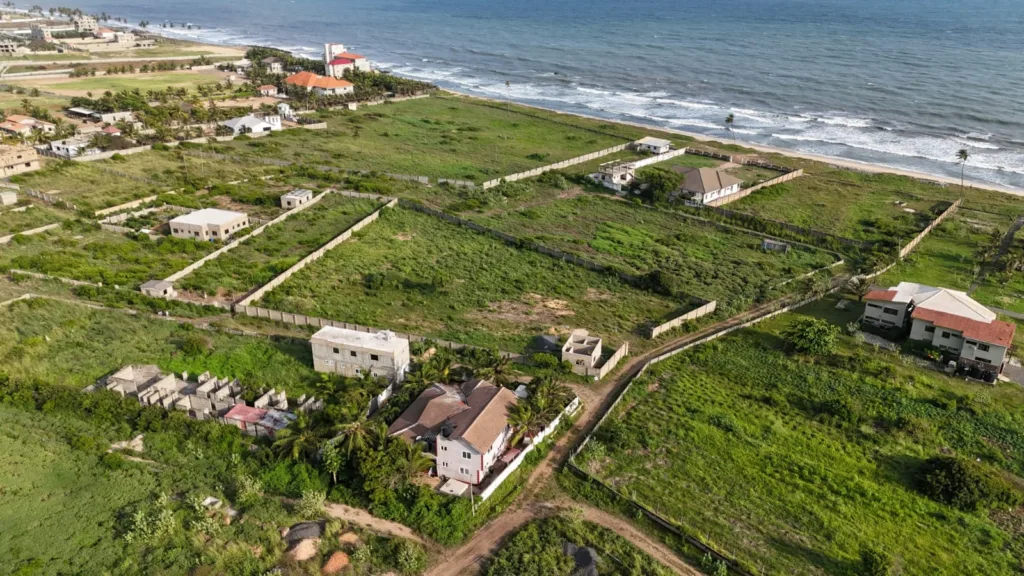
It is easy to make a point about land investment sound obvious in Uganda: given the fact that, in its untamed state, it is such an abundant resource in a country like ours. You can see why most Ugandans would default to it, especially when evaluating the many properties for sale in Uganda that promise long-term capital appreciation.
And given the numbers concerning how much it appreciates, it becomes such an appealing investment option, especially when you look in the right places. Looking at the appreciation data alone, the Entebbe Road corridor appreciated 450-800% from 2015 to 2026. That’s 17-20% annually over 11 years.
Even more recently, the rapid development of infrastructure in certain areas bordering Kampala, such as Wakiso, Kira, and Kasangati, has made them much more accessible and affordable options for residential and business operations than the mainstream central business district. This has led to massive capital appreciation of plots of land in those areas.
And with this noted, the presence of available land for development comes with caveats too.
Hidden Costs
Your land in a fast-developing zone could be tripling or quadrupling in value over a couple of years if infrastructure development in those areas increases. That’s actually happening in multiple places around Kampala and its outskirts.
But have you calculated the security costs for undeveloped land, the opportunity cost of capital not generating income, and inflation all cutting into the capital appreciation you are summing up? When you do the math, those 300% appreciation gains we had so much hope in are down to maybe 100–150% of what you would ordinarily calculate.
Low Barriers to Entry
Land usually requires a smaller investment per square meter compared to an already developed project. And because most people are getting into it, there are more cases of fraud, meaning you have to ensure your land title is always updated and secure from encroachers. You’ll have to make multiple site and maintenance visits, and you should have a standby legal reserve in case you need to take land grabbers or encroachers to court, which happens much more often than you think.
Flexibility and Control
Land gives you the initial feeling of freedom because you can do whatever you want: build a mall or commercial space to rent out, set up apartments, subdivide it into plots for sale, or maybe build a home.
However, that isn’t as straightforward as you’d think. You have to factor in zoning laws, which primarily dictate what you can set up, the development costs of putting up a structure, obtaining permits, vetting contractors, and managing those contractors. All of this takes precious time.
And all of this begins to reveal the downside to all these beautiful advantages we’d like to explore.
No Immediate Income Generation
There’s very little you can do with land if you’re not developing it. Maybe rent it out for farming. But regardless, the thought that you would have continuous cash flow from simply possessing land is rarely realistic.
Liquidity
One of the biggest challenges with land is the need to sell it quickly. It usually takes much longer – weeks, months, or even years to sell compared to properties with developments on them. It’s much easier to sell the vision of an apartment or standalone house to a buyer than merely a piece of land.
Infrastructure Dependency
When governments seek to develop certain areas, they often start with locations that already look promising economically: those with bustling centers, busy roads, schools, and hospitals. Those are usually areas with developments in them and rarely bare land.
As a result, areas with unused land risk receiving less infrastructure prioritization and are less likely to appreciate as quickly as areas with residential or commercial properties.
Also, buying land in the hope that it will be developed in the future often depends on how long the government takes to follow through. The Kampala–Jinja Expressway was officially proposed around October 2016 by the Uganda National Roads Authority (UNRA) as a dual-carriageway toll road to relieve severe congestion on the existing Kampala-Jinja highway, and construction hasn’t even commenced yet. 10 years is a lot of downtime to wait based purely on hope.
Now, before we switch to the other side of the conversation, we’d like to establish what is driving it in the first place.
We are noticing a clear shift in how development has been happening in prime locations across the city over the past 20 years, with old detached houses in Kololo and Nakasero being demolished and replaced with apartments for sale in Kampala. This is heavily driven by increased demand for high-quality, lifestyle-focused living spaces within the city’s prime locations, while the available land supply remains limited.
Now, this actually happens to be the foundation of one of the best-performing real estate investment strategies.
Imagine someone bought land in Kololo 20 years ago and, instead of building a home, developed a modern apartment block. That investor would be capturing both the land appreciation that comes from owning property in a well-developed area and the rental returns generated by highly sought-after units.
Yes, buying land that can triple in value is a very wise thing to do. But holding it until you are ready to do what you please with it could be costing you much more than you think.
The optimal strategy is buying land with the best development fundamentals already in place, something most people simply do not have the time or resources to pursue since they are not full-time real estate developers. The fact is that land investment is not wrong. But it relies heavily on the speculation of many unseen factors, including the ability of both the land and the surrounding area to develop.
Pros and Cons of Buying an Apartment
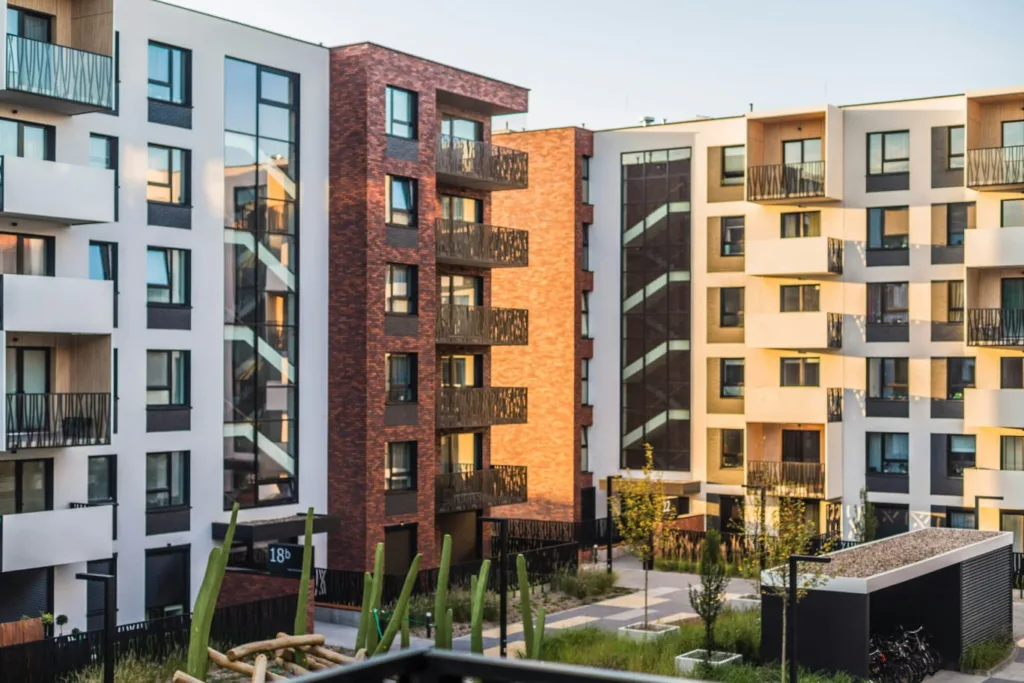
Apartments for sale in Kampala seem like the obvious better choice. Clearly, you buy into a good block, rent it out, and start earning dollars immediately.
And that is fundamentally true according to the numbers. Apartments in the most prime locations and areas deliver the strongest rental returns, typically yielding between 7 and 10% and sometimes even 2-3 times that when positioned right. Our studio apartment unit at Cadenza Residence, purchased at a prelaunch pricing of $72,000 and rented at $2,730 per month according to the market pricing, would generate an exceptionally high 45.5% gross annual yield, meaning the investment could pay for itself through rental income alone in just over 2 years.
But that’s not always the full story.
Income Generation
Yes, you could generate maybe $1,500 monthly, but what’s the occupancy rate? What are the management costs? Do you even have a good property manager?
That’s how your theoretical $18,000 annual income might come down to even half of that under suboptimal conditions.
Professional Management
Okay, you’re able to find someone to manage the property for you. But how competent are they? How well do they manage the common areas? How quickly do they fix a leak when you’re not around or when the issue is in an area you have no direct control over?
It starts to seem like an uncertain gamble.
Lower Maintenance Burden
On the plus side, maintaining an apartment, even individually, is far less costly and time-consuming compared to owning an entire standalone house.
Think of landscaping, maids, chefs, and everything in between. The apartment starts to feel like a breath of fresh air.
At the end of the day, apartments also face variables such as increased market supply in the long run, with similar developers entering the market and replicating designs and amenities, as well as shifting client preferences over time.
However, given that land appreciates at a high rate, owning an apartment in the right location means you are enjoying the best of both worlds. You simply need to address the loopholes that come with owning something so valuable in such an unpredictable environment.
And this is where trusting professionals with the heavy lifting becomes valuable.
VAAL offers the best of both worlds
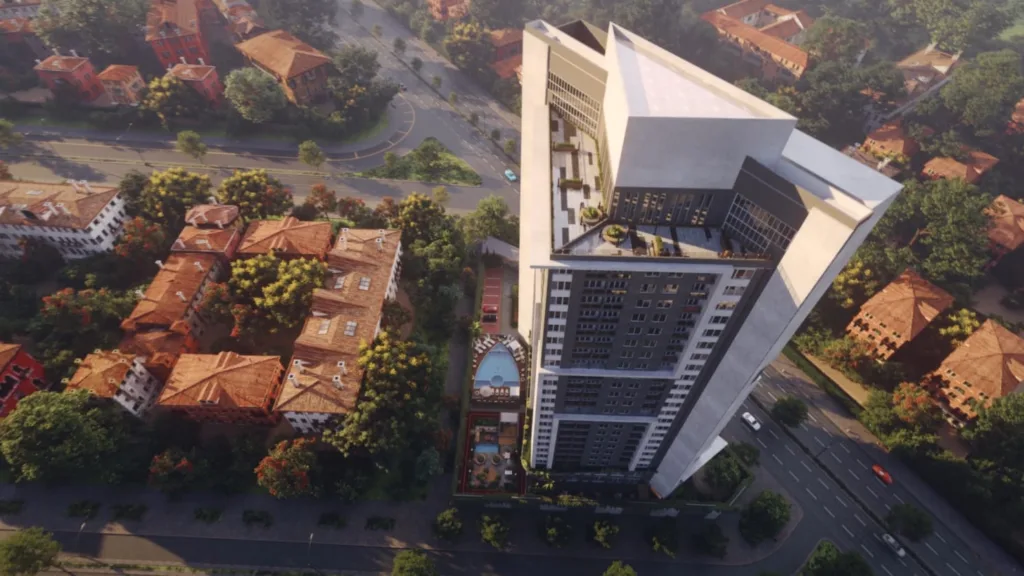
VAAL, unlike many other developers, is built from the ground up with the goal of filling these gaps and offering even more than you would expect.
Staying true to our foundation in Uganda, we understand the importance of capitalizing on land appreciation by positioning our developments in areas that are not merely expected to develop in the future but are already hotspots for development today, such as Nakasero and Kololo.
With embassies, hotels, and government offices in close proximity, road access and security are prioritized by the authorities, making these some of the fastest-appreciating locations in the country. These institutions also attract affluent professionals and expatriates as part of their workforce, people who need places to stay and are willing to pay for a standard of living that matches their lifestyle.
That is why Cadenza Residences and The Bridge Kololo are designed to meet the lifestyle needs of these categories, from an extensive range of wellness and recreational amenities to services such as 24-hour concierge support and video intercom systems that enhance security and comfort.
Furthermore, because many owners do not intend to live in these units throughout the year, we have made it possible for them to hand their units back to us. Through our property management team, we find tenants and ensure rental income is paid directly into their accounts.
And because we developed these projects ourselves, it makes sense that we know how best to maintain them. That is exactly what our property management team is there for. No late-night phone calls. No disturbances. Just the comfort of knowing that the people who sourced the materials and built the development know how best to maintain and repair it when necessary.
In the end, you get the capital appreciation of an optimal location, coupled with maximum returns from highly sought-after apartment units, all within a luxury residential development equipped with a full range of convenience-focused amenities and finished with premium-quality materials.
Ultimately, it has never been about choosing between land and an apartment for any wise investor. It is about recognizing that the highest-value investment captures land optimization through vertical development, generates income through professional management, and positions you to take full advantage of the market.
Call us on +256 765 500 000 and let us walk this journey with you as you position yourself for long-term real estate success.
FAQs
1. Should I buy land or an apartment in Uganda?
There’s no fixed answer. Land and apartments serve different purposes, and the right choice depends on whether you’re prioritizing long-term growth or immediate income.
2. Does land always appreciate faster than apartments?
Not always. While land can appreciate significantly in developing areas, real returns depend on infrastructure, location demand, and how long you hold it.
3. What are the main risks of buying land?
Risks include unclear ownership, security costs, delayed development in the area, and the fact that land doesn’t generate income unless developed.
4. Why do people prefer apartments in Kampala’s prime areas?
Because they can generate rental income quickly, especially in high-demand areas like Nakasero and Kololo, where tenants value location and convenience.
5. Is it better to invest for cash flow or capital growth?
It depends on your strategy. Cash flow comes from apartments, while capital growth is often associated with land: the strongest investments often balance both over time.
