
Growing up, most people are fascinated by the idea of not having to worry about money.
We just can’t wait to reach the point in our lives where we have enough to sustain ourselves, to live comfortably, and to not worry about paying rent, medical bills, or any unexpected expenses.
So when we get the opportunity to access the desired amount of money, one of the first instincts is to invest. And with investment, the question comes down to the safest and most reliable place to put it, and for many, the default is real estate.
People having worked for years abroad or having landed a significant deal are usually known to immediately acquire a piece of land somewhere with the hopes that it will appreciate and make more money for them. Yet at the point of purchase, they are usually looking at what’s happening presently in that area.
But the smarter ones aren’t just thinking of the now; their minds are further into the future.
They will be asking questions like
- How will this investment look in 10 years?
- What about 20 years?
- What about 30 years?
- How will this land, house, or apartment perform over time?
The unfortunate bit is that most people tend to look to today’s statistics to answer that question.
Why Looking at Today’s Statistics Isn’t Enough
They’ll look at how much land is being sold in the area, what the rental yields are for that apartment unit and how much they are making out of it, and what kind of interest they are being charged to purchase this long term.
We do agree; all these are great places to start looking, but what if there is another way to arrive at better answers? What if, instead of only studying the present, we tried to understand the future: What will Uganda look like 30 years from now?
This is particularly important in real estate because, unlike many other investment vehicles, real estate is much more dependent on external forces surrounding it than the land or apartment itself, many of which happen to be long-term forces.
A stock can rise or fall based on what’s happening in the organization over the next few months. A currency can fluctuate overnight due to a conflict within the state. Property, on the other hand, tends to link its value to things like roads that haven’t been built yet but are still on plan, factories that might be constituted that haven’t been thought of, or even an influx of a population that hasn’t made its way to the region.
And in knowing this, those experienced in real estate investment tend to stay away from current factors in predicting property value. On the other hand, they are more intentional with understanding what looks quite ordinary today but has the greatest probability of growing by a milestone in the next couple of years. That’s the true opportunity.
And as you could have it, in Uganda, we’ve been saved from all that speculation, at least from most of it. We’ve got something that might give us a glimpse into what the next 20 years might unfold to be.
The government of Uganda, about a decade ago, published a roadmap to how they imagine the next transformation of Uganda from a predominantly agrarian economy into a modern and prosperous nation would unfold; they called this projection Vision 2040. Regardless of whether the targets set by the document are attainable and achievable, this document is so fundamentally important for the nation at large because it points us in the direction of where the emphasis is being put in the next few years by the government.
And for investigative investors, this direction is all that matters in determining where the most likely place your money will grow will be.
Because as we know it, pockets tend to grow in the direction of the economy.
Pillars of the vision
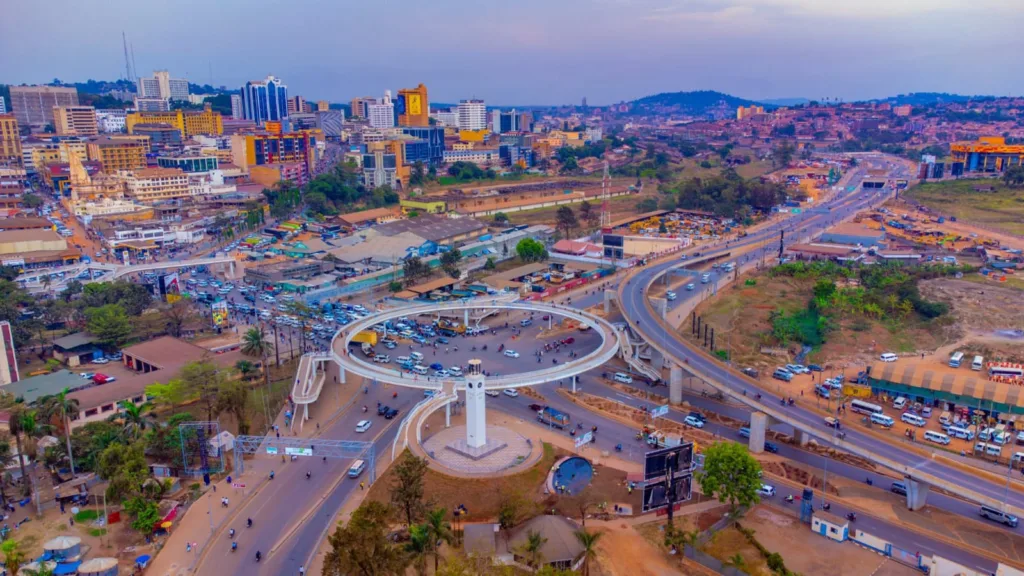
Many African countries have built a reputation for starting things they cannot finish or even saying things they don’t intend to implement. That usually happens because many planners and optimists tend to want to replicate what they have seen work elsewhere piece by piece without taking into context the spaces these structures thrived in.
What makes this vision, in this case, peculiar is that the planners took into account the fundamentals that give Uganda as an economy leverage other than broad aspirations they would have. They did this by settling around 6 crucial pillars that they noticed are pivotal to Uganda’s economic prowess.
- Infrastructure development
- Science, technology and innovation
- Land use and management
- Urbanisation
- Human resource development
- Security and governance
Now. Take a closer look. For real estate enthusiasts, this is such exciting news, because 3 of the 6, literally half of them, in one way or another, are bold factors that impact how valuable property is going to become in the future. Infrastructure, Land use and management, and urbanization. And notice what’s first on the list – Infrastructure! This is a bold statement to say: infrastructure is the foundation, and without it, nothing else functions optimally. That’s a bold commitment.
Now understanding this, the efforts to radically transform the infrastructure include transport networks, energy generation, ICT systems, water infrastructure, and industrial development. This is being done because historically, infrastructure has proven to be a significant driver in the appreciation of property.
And this is as straightforward as it gets. Improving infrastructure majorly means revolutionizing accessibility. Now businesses can carry their goods and make transportation for them much easier. People can easily get from one place to another seamlessly.
And that right there is increased economic activity and opportunity for transaction, which in turn increases demand for spaces to be rented out and bought, be it apartment units or land. An increase in demand equals an increase in property value.
And this is a pattern we have witnessed from time immemorial with growing cities. All the fundamentals of real estate development are kick-started by development of the infrastructure around it. Roads and railways connecting ports and cities, then communication lines and better buildings, which leads to better established cities and higher property values.
And with this vision, it is clearly demonstrated beyond this traditional infrastructure system; we are now seeing more technologically forward things like ICT parks, digital government services, innovation hubs, and significantly expanded power generation capacity.
The energy commitment is demonstrated by the first nuclear power project, which is expected to be connected to the national grid by 2031 and will initially generate 1000 MW, according to Ruth Nankabirwa, the former Minister of Energy and Mineral Development. This serves as a heavy signal because countries usually never commit to energy generation based off the current demand; it’s always a clear sign that future industrialization is anticipated, hence the groundwork has to be properly laid.
This is a clear indication that infrastructure is not a response to growth; it is the evidence of a confident future being predicted.
And this brings us right to the next point:
Ugandan urban life.
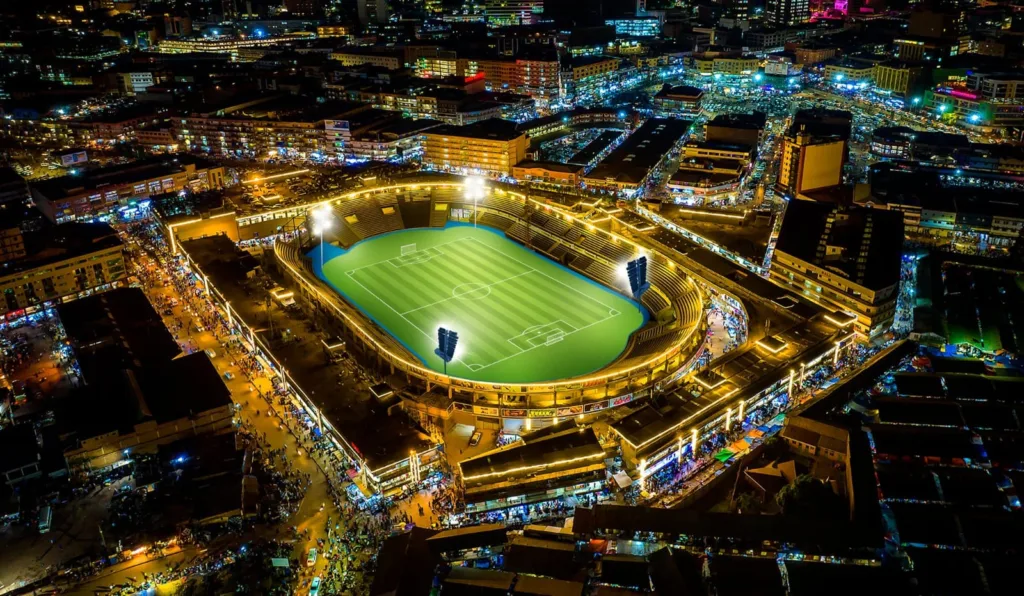
With a vivid infrastructure foundation established and an influx in population from the surrounding areas brought about by the fast-paced exchange of goods and services, all this necessitates a better array of conditions to enable this newfound society to live peacefully and primarily. That’s a basic definition of urbanization.
The transition into a robust economy depends on new structures to facilitate this fluidity. And that’s where many theoretical ideas become a practical need. We see the investability of industries like banking, insurance, telecommunications, technology, healthcare, education, consulting, and professional services. All these love to cluster around talent and places with customers. And all that then forms a powerful chain reaction.
Think about it: this now means that there are more service and product businesses to facilitate this new and better aspiring population. More businesses mean more jobs that require a more literate workforce, which requires better and more modern housing conditions, which creates a demand for more rental properties and more uses for land, which then leads to a rapid increase in property value. This is a clear, already visible pattern.
Even more, as these businesses get bigger, we start to see their multinational counterparts expand into the country. This leads to an influx of an international demographic that has better expectations regarding housing and lifestyle. Many of them have worked in Johannesburg, or Cairo, or even London and New York; their expectation of housing is much different; hence, we see a whole evolution of what the demand looks like.
They are now no longer looking for just shelter; they want to match their expectations. They are looking for a lifestyle ecosystem that combines comfort, reliability, and convenience.
And these in particular value things like security, professional property management, Reliable utilities, integrated amenities, walkability, Reduced commuting times High-quality living environments – that’s the phenomenon.
And all this speaks to the scale of how far this is expected to go. When weighing this against what we’ve practically seen happening and the numbers where we are now, we realize that we are at the cusp of a great economic transformation.
The estimated growth of Uganda
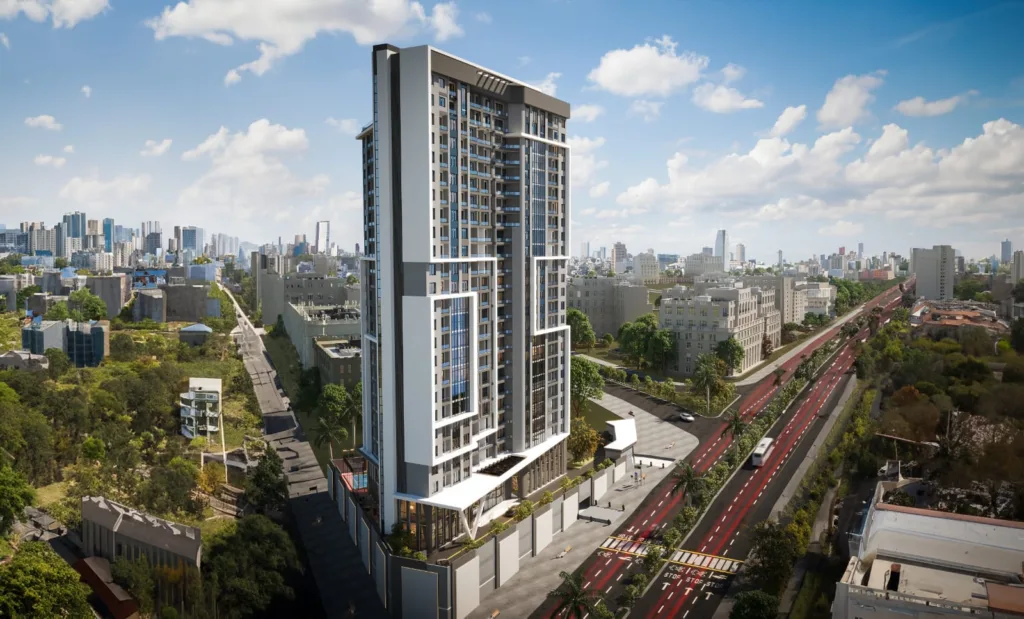
The trajectory is clear: a robust improvement in infrastructure leads to rapid urbanization, which pulls investors from far and wide, even from out of the country. And that evolution of demand leads to greater expectations, which creates a demand for better delivery. A person earning a million shillings a month has vastly different housing options from one earning above fifteen million shillings, and that differs from one earning beyond thirty million shillings.
A higher price point means a greater expectation around their living considerations. They will prefer the areas with better infrastructure, better service delivery, and ultimately locations with better security; houses with better finishes and more modern amenities that can facilitate their more expensive lifestyles.
This already changes the entire look of the property market.
And as an investor seeing this, one of the biggest mistakes one can make is assuming that today’s Kampala market will look similar 15 to 20 years from now.
Just think about Kampala twenty years ago; let history be our teacher. It was barely unrecognizable, and now imagine twenty years of population growth, infrastructure investment, economic expansion, urbanization, and international investment. The Kampala of 2040 will likely be very different from the Kampala we know today.
And with the government’s projections on where it tends to exert its pressure and tighten its focus, this can only mean the acceleration in those arenas is going to skyrocket, most of which are directly impacting real estate.
And if there’s anything you could take out of this, it’s that now knowing this, how you position yourself will make all the difference, especially considering the government is showing you where all the effort is going, where all the eyes should be seeing.
Most investors look at today’s statistics to determine tomorrow. Uganda’s Vision 2040 is a clear glimpse into what the future is going to look like and a clear blueprint on how to position yourself in it.
The future will not reward those who merely react to change. It will reward those who position themselves before that change arrives.
Visit our showhouse at Plot 1 Katonga Road, Nakasero or call us at +256 765 500000 to lock in your investment today.
FAQs
1. What is Uganda Vision 2040?
Uganda Vision 2040 is the Government of Uganda’s long-term development framework designed to transform the country from a predominantly agrarian economy into a modern and prosperous nation. It outlines key priorities such as infrastructure development, urbanization, industrialization, and land use planning that are expected to shape Uganda’s economic growth over the coming decades.
2. Why is Vision 2040 important for real estate investors?
Vision 2040 provides insight into where government investment and development efforts are likely to be concentrated. Since property values are heavily influenced by infrastructure, economic activity, and population growth, understanding these priorities can help investors identify areas with strong long-term appreciation potential.
3. How does infrastructure affect property values?
Infrastructure improves accessibility, transportation, utility services, and economic activity. As roads, power systems, ICT networks, and public services improve, businesses and residents are attracted to those areas, increasing demand for land and housing. Higher demand often translates into higher property values over time.
4. What role does urbanization play in real estate growth?
Urbanization increases demand for housing, commercial spaces, offices, schools, healthcare facilities, and other services. As more people move into urban centers seeking employment and opportunities, property demand rises, creating opportunities for both capital appreciation and rental income.
5. What should investors look for when evaluating long-term real estate opportunities?
Investors should look beyond current market conditions and consider future growth drivers such as planned infrastructure projects, population trends, urban expansion, government development priorities, and emerging business districts. The most successful real estate investments are often made in locations positioned to benefit from future growth rather than current popularity.
