
Saturday, 9:47 AM. Janet Namukasa is seated in her car outside yet another property viewing in Bugolobi, scrolling through her phone with mounting frustration: this is property number 14 out of six weeks of searching.
The Kololo house with the beautiful garden had power outages happen twice during the viewing – no backup generator. The “luxury” Muyenga duplex with the stunning photos, but the gym membership alone would cost UGX 300,000 monthly, the nearest preferable pool was a 20-minute drive away, and the security consisted of one gate guard.
Her real estate agent called. “Ready for the next viewing? This one’s special; a standalone house in Ntinda, four bedrooms, a spacious compound…”
“Stop,” Janet said. “I need to ask you something. Have you actually listened to what I’ve been telling you for six weeks?” The agent paused, confused. “Of course. You want modern, well-located, good security…”
“No,” Janet interrupted. “I’ve been saying I want to live like I lived in London. I don’t need four bedrooms – I live alone. I don’t want a compound requiring a gardener. I don’t want to join three different clubs just to swim, work out, and have workspace when I need quiet. I want one address that delivers a complete lifestyle – why is that impossible to find in Kampala?”
The agent went quiet. “Mrs. Namukasa, what you’re describing… that type of integrated lifestyle property doesn’t really exist here. Not yet.”
Not yet. Those two words hung in the air like smoke. What her realtor hadn’t figured out was the dilemma Janet faced wasn’t about finding the right house, it was about the fact that Uganda’s residential market has been solving the wrong problem entirely.
The Dilemma of Buying a Residence in Kampala
After that phone call, Janet did what any frustrated person with internet access does: research. Her findings exposed a reality about Kampala’s residential market that most of us don’t seem to properly address.
Knight Frank’s Kampala Property Market Performance Report covering H1 2024 shows demand for prime residential units continues to be driven by expatriates and Ugandans living abroad. On the surface, this sounds like market equilibrium – demand meeting supply, everyone happy, but dig one layer deeper and the cracks start to appear.
Short-term rentals are becoming more popular, with platforms like Airbnb and Booking.com streamlining the process for tenants who prefer the convenience and flexibility of furnished accommodations. Why are serviced apartments and short-term rentals growing so fast? And it’s not because people prefer temporary living, but because they can’t find permanent options delivering what they actually want.
Janet’s frustration wasn’t unique; it was typical, and the more she researched, the more the pattern became undeniable – take a look.
The False Choice Kampala Forces on Buyers
This is a peek into the dilemma that Kampala’s residential market creates:
Option A: Standalone Houses
You get space, privacy, and your own compound, but you also get endless maintenance (gardener, security, exterior painting, generator servicing, water tank management) and isolation from amenities (need a gym? Join a club. Want to swim? Drive somewhere. Need a quiet workspace? Find a café), security concerns that feels unreliable, and the burden of managing a property instead of living your life.
Option B: Existing Apartments
You get convenience, less maintenance, sometimes security, and a few basic amenities. But you also get thin walls causing you to share in your neighbors’ entertainment, limited facilities that might include a small gym and maybe a pool (often poorly maintained), zero lifestyle integration beyond basic shelter, and the feeling that you’re compromising rather than optimizing.
This isn’t now a choice between good and great, it’s a choice between two types of compromise.
The International Experience
Janet had lived in London for eighteen years before returning to Uganda. Her 70-square-meter apartment there had seemed small to her parents when they visited, but what they didn’t understand was what that apartment actually delivered.
A gym on the 2nd floor, a pool on the roof, and a business center with meeting rooms. Concierge service handling packages and coordinates maintenance with 24/7 security with controlled access and social spaces where she’d met half her friend group. Spa facilities for wellness alongside entertainment areas for hosting.
Her apartment was 70 square meters but she had access to 5,000 square meters of lifestyle infrastructure. “I wasn’t buying space,” she explained to her parents. “I was buying a complete life-delivery system.”
Uganda faces a housing deficit estimated at 2.4 million units, with nearly 1.4 million of those in rural areas, with 900,000 units substandard needing replacement or upgrading. The expected population growth will require an additional 3 million housing units in the near future.
But the deficit isn’t just about quantity, it’s also quality and concept. Developers are responding to urbanization pressure and limited land availability in central areas by building apartments. That’s the right direction, but most are building accommodation when what people like Janet actually want to buy is integrated lifestyle. The gap between what’s being built and what international-exposed buyers actually want is massive and it’s creating the exact dilemma Janet faced sitting in her car outside that Bugolobi property.
After three hours of research, Janet found a realisation that changed her entire approach; she landed on detailed plans for Cadenza Residence – a 25-storey building under construction in Nakasero, scheduled for completion in December 2027. As she scrolled through the specifications, she realized this wasn’t another developer promising a “luxury apartment with amenities”; this was a completely different product category that barely anyone else she had seen was even attempting.
She called the VAAL office. “When can I see the showhouse?”
Cadenza Offers You More Than Just a Residence
When Janet visited the Cadenza showhouse at Plot 1 Katonga Road the following Tuesday, she brought a notebook. She’d learned over six weeks of property hunting to document everything because marketing promises and actual delivery rarely match in Kampala’s real estate market.
But fifteen minutes into the tour, she stopped taking notes – what she was experiencing fundamentally differed from every other property she’d viewed. “Let me show you the amenity breakdown,” the property consultant said, and Janet braced herself for the usual list: “We have a gym and a pool.”
Instead, she heard:
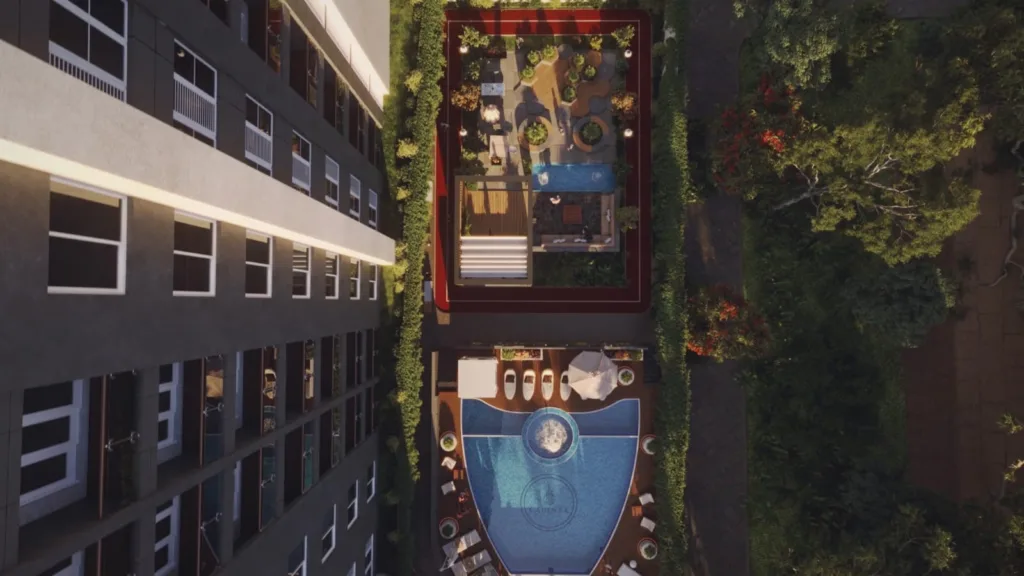
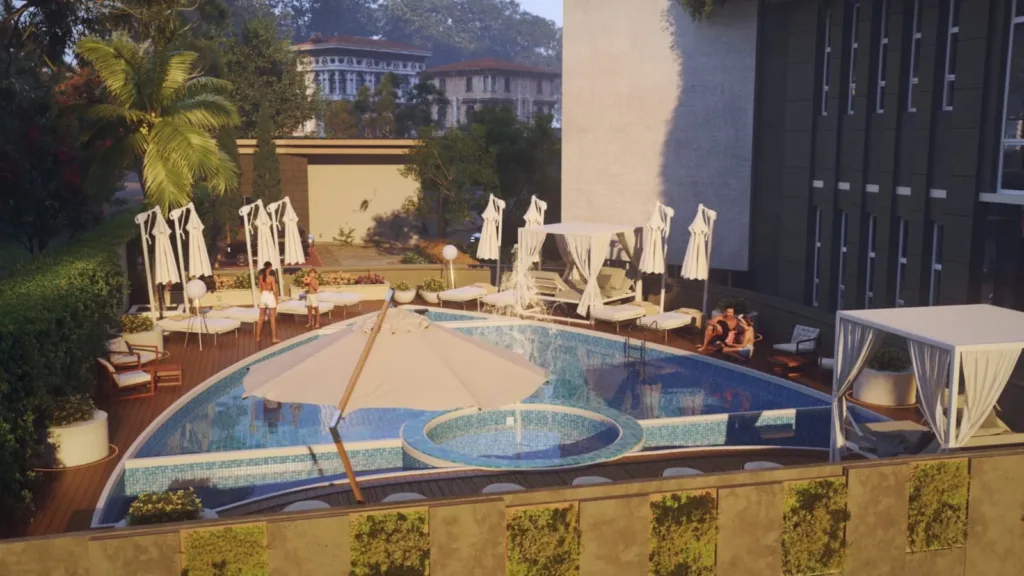
Heated swimming pool—temperature-controlled year-round, one of very few in Uganda’s residential market. State-of-the-art fully equipped gym with modern cardio and strength equipment. Business center with meeting rooms and high-speed internet. Steam and sauna facilities (separate areas for men and women) with spa-standard finishes. Games room for entertainment, a children’s play area for families, and BBQ areas with proper outdoor entertaining facilities. The grand double-storey entrance with 24/7 concierge service and three levels of basement parking. Full backup generator ensuring 24-hour power, high-speed lifts designed for 25-storey traffic, and CCTV surveillance throughout with video intercom systems complete with internet and cable TV pre-installed infrastructure.
Janet interrupted. “Wait. All of this? In one building?” The consultant smiled. “That’s the point. This isn’t a flat with some amenities, this is a complete lifestyle infrastructure you’d otherwise need to access through multiple club memberships, service contracts, and commutes across Kampala.”
The Economic Value Calculated
Her eyes beamed in amazement. “Calculate what these amenities cost if purchased separately,” the consultant suggested, pulling up a spreadsheet:
- International gym membership: UGX 200,000-350,000/month
- Heated pool access: UGX 150,000-250,000/month
- Business center/co-working space: UGX 400,000-800,000/month
- Spa and wellness facilities: UGX 200,000-400,000/month
- 24/7 concierge and security services: UGX 300,000-500,000/month
- Backup power and premium internet: UGX 150,000-250,000/month
Total monthly cost if purchased separately: UGX 1.4-2.5 million. At Cadenza, these facilities are integrated into your residence. You’re not buying a flat and then subscribing to a lifestyle separately; you’re buying lifestyle infrastructure that happens to include your apartment.
The Time Liberation Factor
And the real breakthrough came when the consultant asked Janet a question: “How many hours weekly do you currently spend commuting to access amenities? Driving to the gym, driving to co-working spaces when you need quiet, driving to hotels for pool access, driving to clubs for entertainment?”
Janet stopped and calculated mentally. She started going to the gym three times weekly: 2 hours in traffic. Co-working space when working from home became impossible: 3-4 hours weekly. Occasional pool or spa access: another hour. Minimum 6-7 hours weekly. That’s 300+ hours annually just commuting to live the lifestyle she wanted.
At Cadenza, every amenity is an elevator ride away. That’s 300 hours recovered annually – equivalent to 7.5 full work weeks of time returned just through residential efficiency. “I’m not buying time at Cadenza,” she realized. “I’m getting time back that Kampala’s geography and infrastructure currently steals from me.”
The Experiential Evidence
As the tour continued, the consultant kept saying “when Cadenza completes in December 2027” rather than “if you move to Cadenza.” Because this wasn’t a completed building she could move into tomorrow. It was an off-plan purchase requiring faith that construction would deliver what was being promised.
But other than this throwing her off, she was confident because she had read VAAL’s track record. Founded over 20 years ago with operations in Egypt, Kenya, Ghana, Turkey and Tanzania. Over 2,000 housing units delivered to market across these countries, serving more than 5,000 clients internationally, and currently constructing Cadenza as a multi-million dollar project with over 250 homes across 25-storeys.
“The amenities I’m showing you,” the consultant explained, “aren’t conceptual. We’ve built and operated these exact facilities in our Kenya projects for years. We’re not experimenting with your investment; no, we’re replicating proven excellence.”
The Location Multiplier Effect
Then came the part of the tour that sealed Janet’s decision. The consultant walked her to the 6th floor of Cadenza, under construction, and pointed out landmarks visible from its location: Parliament of Uganda. State House. United Nations offices. Embassy of Sweden. South African Embassy. Multiple diplomatic missions creating what security professionals call a “blue-marked zone.”
“This institutional presence means infrastructure priority,” the consultant explained. “When power goes out elsewhere, blue zones get restored first. When road maintenance gets delayed city-wide, diplomatic quarters get serviced. When security matters, this neighborhood receives protection systems designed for heads of state.”
“This location advantage can’t be replicated. Future developers might build nice towers, but they can’t build next to Uganda’s governmental and diplomatic center. This positional advantage is permanent.”
As Janet prepared to leave, the consultant differentiated Cadenza from every other property she’d viewed: “Most developers sell you a flat and wish you luck figuring out your life around it. At Cadenza, we’re engineering complete lifestyle infrastructure so your residence supports how you actually want to live. The flat is important. But it’s just the starting point, not the entire offer.”
Janet stood there processing everything she’d experienced over the past two hours. Then she did the math on what six weeks of frustration had been trying to tell her: She didn’t need another viewing. She needed to wait for just under two years when Cadenza would finally deliver what Kampala’s market had been missing – not another accommodation option, but complete lifestyle infrastructure designed for how internationally exposed Ugandans actually want to live.
Luxury Lifestyle of Uganda
Uganda’s luxury lifestyle expectations are transforming rapidly, driven by three demographic forces that most developers haven’t recognized yet:
Force 1: The Returning Diaspora
Ugandans who’ve lived abroad – like Janet, like thousands of others returning with international experience and capital – aren’t asking for bigger houses; they’re asking for integrated lifestyle systems they’ve experienced in London, Dubai, Singapore, and Nairobi.
The serviced apartment segment growing 12% in 2024 in Kololo and Nakasero isn’t random; it’s the returning diaspora saying “this is the closest thing available to what I actually want.”
Force 2: The International Professional Wave
With Uganda attracting expatriates across NGOs, diplomacy, finance, and emerging sectors like oil and technology, demand for international-standard living is mainstream for the professional class actually driving luxury real estate.
Studios and one-bedroom apartments are most sought-after, favored for their balance of space and convenience, making them particularly appealing to the expatriate community and returning Ugandans. But “balance of space and convenience” is code for “best compromise available given current options.”
Force 3: The Young Successful Ugandans
With Uganda’s population 78% under 30 and economic growth at 6.5% in 2024/25 creating larger middle class with increased purchasing power, the generation entering peak earning years isn’t adopting their parents’ housing preferences. They’ve traveled internationally, work remotely, and value experiences over things. They want lifestyle optimization, not wasted space, and current market options don’t serve them.
Janet then explained Cadenza to a friend that had moved back to Uganda recently, too:
“For six weeks, I thought my dilemma was choosing between flats in Kampala. But that was never the real choice. The real choice was whether to compromise on lifestyle by buying what’s available now, or invest in what I actually want by securing a position in Cadenza before completion.”
She paused, then continued: “When Cadenza is completed late next year and people experience what complete lifestyle infrastructure actually means in Kampala – heated pools, spa facilities, business centers, professional management, and comprehensive security, all in Nakasero’s blue zone – the conversation about luxury living in Uganda fundamentally changes.”
Her friend leaned forward. “Changes how?” “Currently, people compromise because they don’t have options. After Cadenza, when they experience what’s possible, are they going back to choosing between standalone houses requiring endless maintenance or basic apartments with minimal amenities? That stops being acceptable; it becomes settling.”
Three weeks after that coffee conversation, Janet’s friend called. “I visited the Cadenza showhouse today. I get it now.”
“Get what?”
“Your frustration during those six weeks wasn’t about finding better flats. It was about being forced to choose between inadequate options when what you actually needed didn’t exist yet. And realizing the only solution was to stop choosing from what’s available and start investing in what should be available.”
Janet laughed. “Exactly. Why buy a flat when you can buy a lifestyle?”
“Because in Kampala right now, you mostly can’t. But in 2028, you finally can. At 80 meters above Nakasero, in a building that integrates lifestyle infrastructure instead of just providing accommodation.”
Visit our showhouse at Plot 1, Katonga Road, or call +256 765 500 000 to experience what 80 meters of vertical excellence and comprehensive amenity integration looks like.
