
The meeting that was supposed to take thirty minutes turned into three hours.
A routine presentation when clients come into the office is standard (those who have been to our office know the drill), and this time, it was to a group of international real estate investors researching East African markets. They’d already seen developments in Nairobi, Dar es Salaam, and Kigali, Kampala was just another box to check before making their allocation decisions.
We showed them the Bridge, and three hours later, they were still asking questions. Not the polite, expected “we’ll get back to you” questions. These looked somewhat different, more like the urgent “who else knows about this” and the “what’s the timeline” questions. These usually are the kind of questions that signal payments are right around the corner.
One of them, a woman who’d made a fortune in Dubai and London luxury real estate, finally asked what we assumed everyone was thinking: “Why isn’t every experienced investor in Africa, especially Uganda talking about this?” – that was an excellent question.
When most sophisticated investors that look at the trends, they realize that Kampala’s luxury residential market is experiencing something that typically takes decades to unfold, compressed into a 24-month window. Serviced apartments saw a 12% increase in demand in 2024, which sounds modest until you understand that this represents the one of the fastest growth rates of any major African market outside South Africa.
But that’s not the secret, those carefully tracking African real estate know demand is growing, the secret is what’s happening at the supply end: that’s the real plot twist.
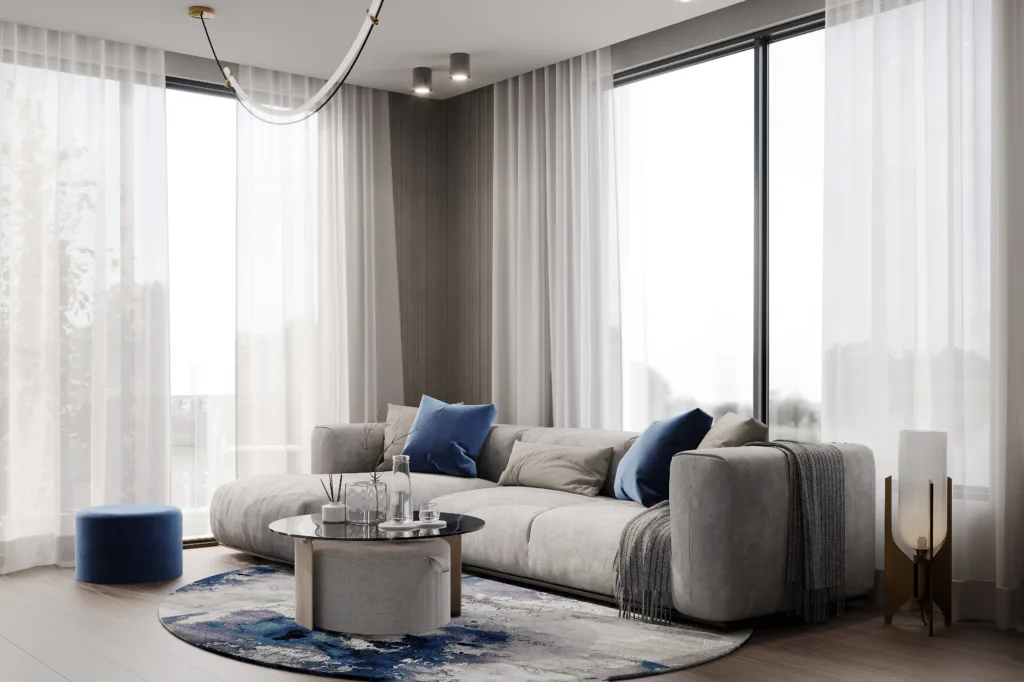
The Bridge Project
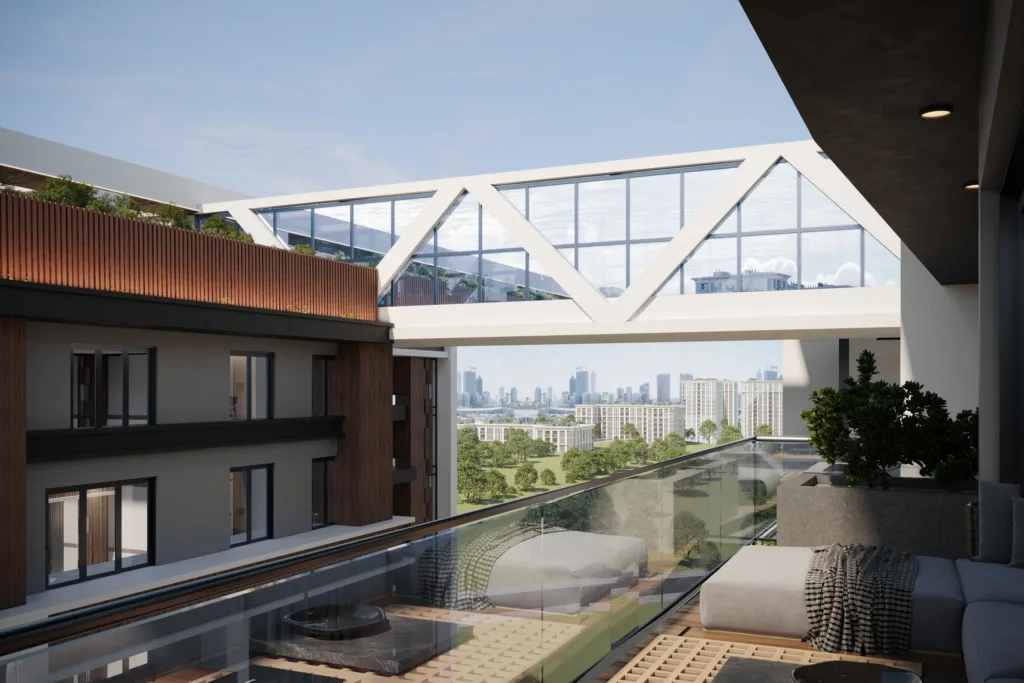
From street level, The Bridge looks like a luxury apartment development. Two residential towers connected by a skybridge in Kololo, beautiful architecture, obviously in the luxury price category, clearly targeting the high end of Kampala’s market.
That’s the standard luxury story people tell, the song they sing; prime location, quality construction, and loads of amenities. You’ve seen this before in every growing African capital, except there’s a detail most people miss when they first encounter The Bridge, one so significant that everything else about Kampala’s luxury market suddenly makes sense in a completely different way.
It’s visible specifications are impressive enough. Again, the twin Towers create an architectural distinction, then add onto it the skybridge connecting them at the highest floor creating that Instagram-worthy visual that defines luxury developments. Then the Kololo location, which everyone knows is Kampala’s premium diplomatic zone.
Inside, there are well-designed apartments ranging from studios to three bedroom units. From the high ceilings, large beam-to-beam windows, premium finishes; the kind of quality you’d expect in any international luxury development. And yes, amenities, that’s no compromise with the Bridge. In that arena, it boasts over 25 of them: a temperature-controlled pool, state-of-the-art gym, indoor and an outdoor rooftop cinema, not to mention the co-working spaces, rooftop gardens and gazebos for star-gazing, the entertainment lounges, and dining areas. It’s an impressive list.
But interestingly, that’s not what was driving our Dubai investors’ curiosity.
When that she and her consotrium kept asking questions for three hours, she wasn’t asking about finishes or square meters. She kept circling back to one specific thing about The Bridge that didn’t match her experience in other emerging markets.
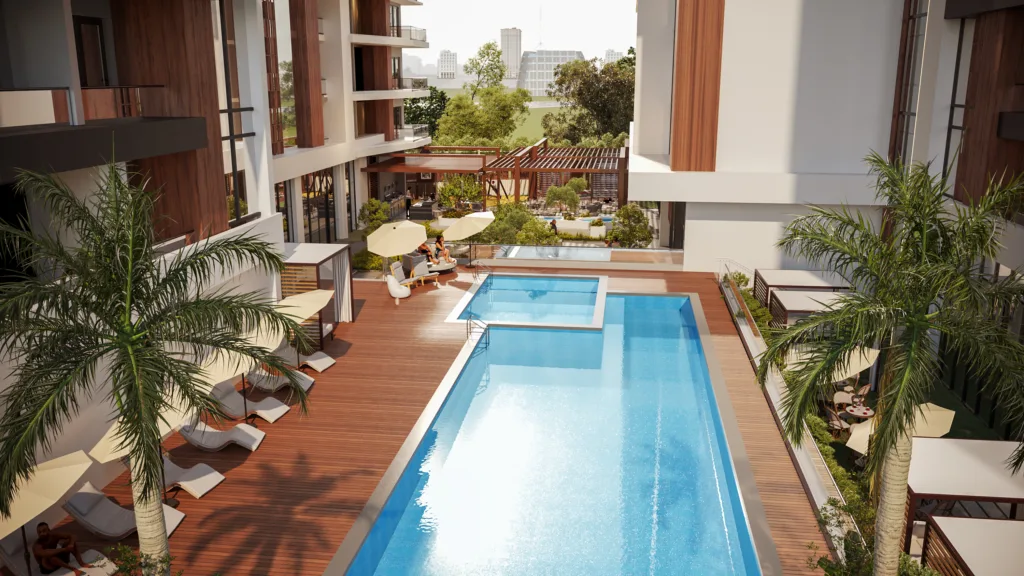
How Amenity Density Makes The Bridge Unique
In most luxury developments, amenity packages scale linearly. More units mean proportionally more amenities to serve them – standard mathematics. You’ve got 500 units?, you build a bigger pool, expand the gym, maybe add a second social lounge.
The Bridge’s mathematics work differently. Much differently. When most luxury residential developments expand amenities, they follow a simple rule: more units, more facilities, but just enough to serve the resident count.
Take a standard urban tower in London like Chelsea Barracks with 250 units. The package is predictable: a gym, a pool, a concierge desk, maybe a lounge – functional, efficient, but not immersive. Even mega-developments like Continuum South Beach in Miami, with 521 units across two towers, have sprawling amenity offerings but they’re dispersed across a huge resident base, making service and exclusivity hard to maintain.
Boutique and branded residences, on the other hand, operate differently. One Hyde Park in London, with just 86 apartments, delivers Mandarin Oriental-level concierge, bespoke spa facilities, private dining, and curated lounges, Aman New York offers 22 residences integrated with a 25,000-square-foot wellness and garden experience and even the Ritz-Carlton Sunny Isles Beach combines pools, private beach access, and club lounges.
These projects demonstrate amenity density ratios that transform daily living into a resort-level experience and they can do this because the resident population is deliberately small and service infrastructure is designed for excellence.
Globally, the pattern is clear: developments under 300 units rarely offer 20+ comprehensive amenities unless they’re ultra-luxury or hospitality-branded. Standard towers hover around 8–12 amenities, boutique developments 10–15, and ultra-luxury resort-style buildings 20–30+, supported by operational systems that sustain service at scale.
The Bridge defies these norms. With fewer units and approximately 25 high-quality amenities, it delivers a lifestyle usually reserved for ultra-luxury resorts. Pools remain pristine, gyms never feel crowded, lounges are always ready, and every service functions at a level conventional towers simply can’t match.
Why would a developer intentionally limit units? Short-term logic says it reduces revenue per square meter, but The Bridge is thinking long-term. By concentrating residents and maintaining service excellence, it preserves amenity quality, strengthens occupancy, protects resale value, and builds a premium market position.
Every design choice, every curated amenity, reflects a deeper understanding of what high-net-worth buyers actually want: a life where convenience, exclusivity, and lifestyle certainty are built into the very structure of the building. In other words, The Bridge isn’t just a building. It’s a deliberate, long-term investment in resident experience, a rare strategy that few luxury developments attempt, and even fewer execute well.
Luxury Market Trends in Kampala
This is where the story takes a turn. Because what’s happening in Kampala’s luxury residential market doesn’t follow the rules.
The numbers suggest one thing. Uganda’s economy is set to grow 6.5% in FY 2024‑25 – solid, but not extraordinary. Kampala’s population is expanding at over 5% annually, now topping 4 million. Meanwhile, the prime residential pipeline is surging: over 1,000 new units expected in the next 12‑24 months, a 67% increase. Conventional analysis says this should mean slower price growth, rising vacancy, and a market just starting to saturate. Standard emerging-market logic: supply outpaces demand, prices plateau.
But that’s not what’s happening. Old detached houses in Kololo, Nakasero, and Naguru are being replaced by modern apartment blocks – standard gentrification, sure. The twist is these new properties aren’t just modern; they’re commanding top-of-market prices from day one. Serviced apartment demand rose 12% in 2024, largely driven by Ugandans abroad seeking convenience and quality. Yet occupancy rates in premium developments are holding strong at 70%+ even as supply explodes. Two-bedroom prime units saw rent growth of 4% in 2024, modest at first glance, until you consider that the luxury market is expanding 67% in supply and still growing revenue. By every textbook rule, rents should be under pressure.
So why isn’t it?
What Luxury Buyers Really Look for in Kampala
Here’s an interesting statistic; over the past six months, international buyers have quietly entered Kampala’s market, not institutional investors with research teams and drawn-out due diligence, but private wealth, family offices, individuals who made fortunes in Dubai, London, and New York. They fly in, tour multiple properties, ask detailed questions about amenity maintenance and professional management, and make cash offers in weeks.
They aren’t chasing space alone, they’re chasing comprehensive amenities in prime locations – buildings like The Bridge. Pools, gyms, lounges, professional management – the kind of operational rigor most local analysis completely ignores. What these buyers see is a lifestyle proposition, not just square meters, and that insight, once you understand it, explains why Kampala’s luxury market is defying expectations.
Imagine you’ve spent years working as a UN ambassador in London. Your routine is simple, but it works: a safe place to run in the morning, a proper gym downstairs, a quiet space for meetings, somewhere else to unwind, a heated pool when you need to switch off, a steam room when the day has been a lot. It’s not about luxury for the sake of it, it’s just how life flows.
Then you move to Kampala, and suddenly none of that exists in one place. It’s not even about comfort at that point, it’s disruption. You go from a system that works around you to one where you’re constantly adjusting, and that’s the reality for a lot of high-net-worth individuals not that they can’t afford the lifestyle, but that it’s not readily available.
The thing is, they don’t drop their standards, they look for ways to rebuild that same lifestyle wherever they are, and they’ll pay for it. That’s where most developers get it wrong. The demand is there, very clearly – it’s just that very few are building with that level of understanding in mind.
Why The Bridge Will Shock the Market
When you put the pieces together, it starts to become obvious why The Bridge is beyond just another luxury development, it’s something entirely different. You’ve got a building that deliberately limits its units, creating that rare amenity density ratio we talked about. Every facility – from the wellness hub to the lounges and entertainment spaces – isn’t just there for show, they’re designed to operate flawlessly, without overcrowding, with service standards most towers can’t sustain.
Now combine that with a peak, highly sought-after location in Kololo, and you get a property that isn’t just convenient, but commanding; a residence that delivers resort-level living in the heart of Kampala. Add the deliberate balance of unit count and amenity scale, and you’ve got something so rare, so intentionally curated, that when people hear about it, they’re literally shocked. It challenges every expectation of what luxury living in Uganda can look like.
It is evident how The Bridge changes the conversation: suddenly, the market is asking, “How do you achieve this level of exclusivity, quality, and lifestyle in one building?” And the answer is nothing simple yet stunningly clear – it’s by designing with intelligence, foresight, and a deep understanding of what discerning buyers are truly looking for: convenience, experience, and a tangible sense of value that goes beyond square meters.
In short: as other developments in Africa raise the bar, the Bridge redefines it completely. Anyone who will step inside, see the amenities, and experience the level of care will realize immediately – this is not ordinary, this is exceptional, and it leaves an impression that doesn’t fade.
In Part 2, we go on to name what these buyers at the start understood that everyone else missed. It’s a single insight; what we call “the amenity arbitrage” and once you see it, Kampala’s luxury market suddenly makes complete sense. More importantly, so does the urgency because this kind of recognition window doesn’t stay open, it closes in quarters, not years. And right now, it’s still open.
Visit our showhouse at Plot 1 Katonga Road, Nakasero or call +256 765 500 000 to see for yourself what sets The Bridge apart.
