
Trust isn’t declared. It’s accumulated; one delivered promise at a time, across markets, across years.
If you’re thinking about buying property for the first time, or even your second, you’ll notice that there’s one question that tends to ring in your mind over and over again, “Can I actually trust these people?”
Specifically in African real estate, it’s not merely paranoia. It’s pattern recognition; specific, earned, and documented in court filings across Nairobi, Accra, Lagos, and Kampala. There is a particular kind of cynicism that African real estate creates in people.
Research published in the Journal of Business Management & Social Sciences has documented what many investors already know from painful experience: across major African cities, poor risk management, misrepresented titles, and abandoned projects regularly erode investor confidence. In Nairobi alone, studies estimate that around 30% of property transactions involve some form of unresolved legal dispute.
Experienced investors know this; they have either lived it personally or watched someone they trust go through it. So when a developer shows up with render-rich brochures, a gleaming showhouse and a rehearsed pitch about ‘luxury living,’ the healthy response is to ask the uncomfortable question: “Show me the proof. Not the renderings, but the proof.”
Usually, the proof is sitting quietly in delivered buildings, in residents going about their lives, in a track record that stretches across five countries and two decades.
This is VAAL’s story. Not the version we’d necessarily tell about ourselves, but the one you’d discover if you went looking.
Aspiring Projects
Something most people don’t realise about real estate development is that crossing into a new market is, for most companies, where things quietly fall apart.
The developer who knows Cairo inside out doesn’t automatically know Nairobi. The builder who’s delivered a hundred projects in one regulatory environment will make costly mistakes learning a new one. And those mistakes – the delays, the quality compromises, the budget overruns – get paid for by early investors, not the developer.
In 2017, VAAL Real Estate made a decision that seemed, to outside observers, optimistic to the point of naivety. Having spent two decades building over 100 certified residential projects in Egypt, earning a track record in one of Africa’s most demanding property markets, the founders packed up that experience and looked south across the Sahara, into Sub-Saharan Africa. Kenya was the opening move.
The scepticism was reasonable. Egypt’s property dynamics, from the buyer psychology, to the regulatory environment and the construction ecosystem, are nothing like Nairobi’s. It’s natural to assume that there’d be a steep and expensive learning curve. But we did come prepared, having done the right research into where we were going.
Moon Valley, our Dubai-coded twin 15-floor towers that launched in Nairobi did way more than just selling well, it became a case study in Kenya’s premium real estate. It delivered on time, to the standard it promised, and early buyers who held on started watching their properties appreciate at 8–12% annually, meaningfully ahead of Nairobi’s market average of 5–7%.
That might have sounded like luck to the market, but the next three projects made it harder to call it that.
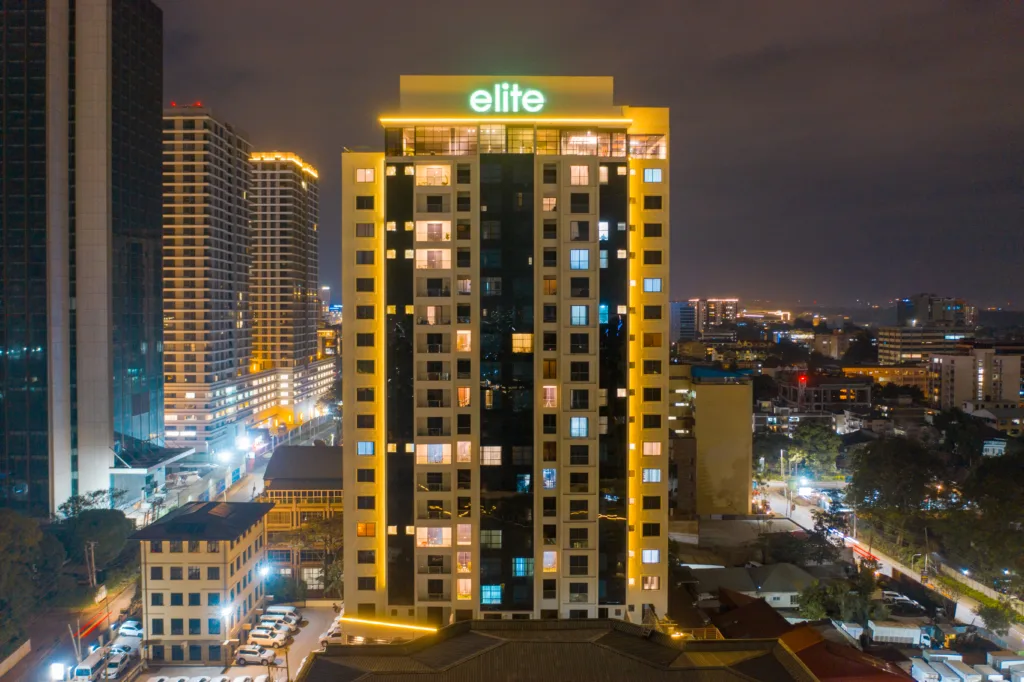
Wilma Towers, Kilimani. Elite Residence, Westlands. Each one delivered, each one performing. Now it wasn’t one spectacular project, it was clearly a pattern. By the time industry analysts ran the numbers, we had climbed into the top three luxury developers in Nairobi by 2024 not because of billboards, but by building it, handing it over, and letting residents move in.
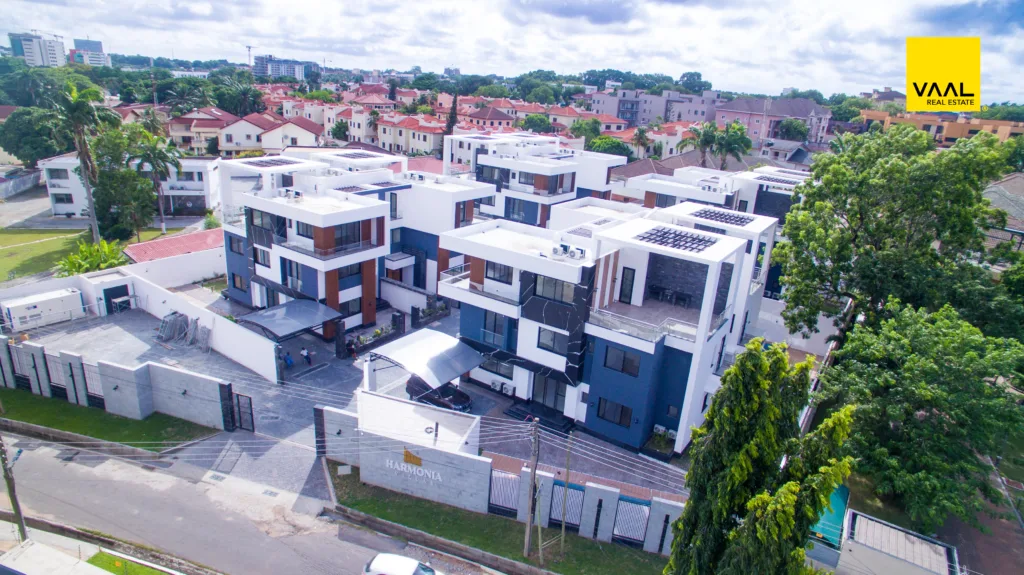
Ghana came next. Harmonia Residence has surpassed 75% sold out, with select units available in the last phase, Harmonia Villas came down to a single remaining unit.
When we announced Cadenza Residence in Kampala in February 2024 – Uganda’s tallest residential building at 24 storeys, 80 metres, 250+ homes in Nakasero – the smart investors did not asked whether we could deliver. The conversation had already moved past that, the question was when to buy.
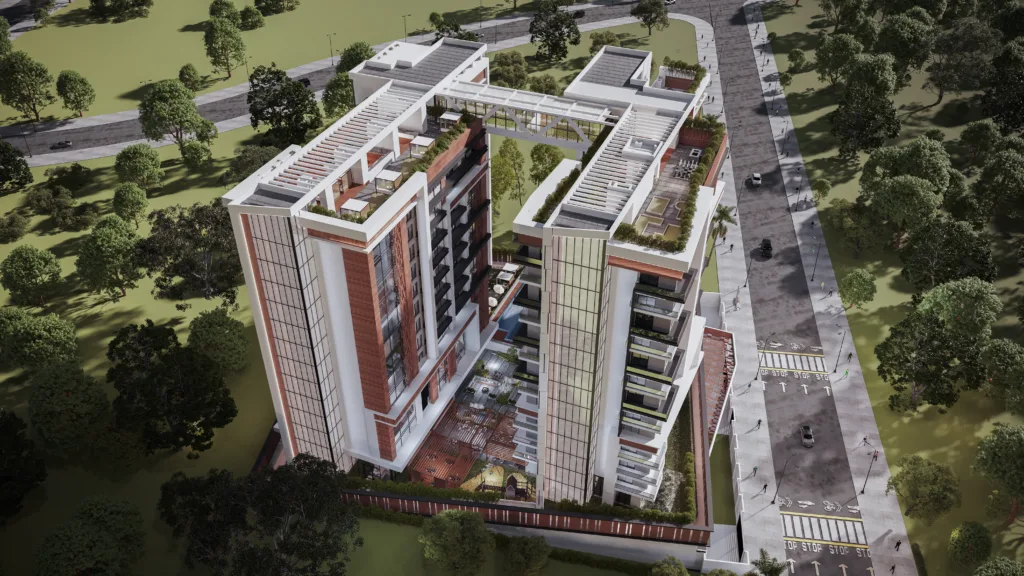
The Bridge Kololo followed in August 2025: twin towers connected by a skybridge, 25 lifestyle amenities, a development that achieved tremendous pre-sales before construction completion. In a market where buyers are cautious and developers’ credibility is routinely questioned, high pre-sale percentages are a metric that speaks volumes. Buyers who had alternatives, who did their homework, chose VAAL, repeatedly.
And this is the rule of pattern: it changes the nature of what you’re looking at. One successful project is luck, two is coincidence, three across two countries over a decade is a built reputation. And seven across three countries is a track record!
Safe Investment
What most investors focus on is the upside; the appreciation projections, the rental yield estimates, the ROI calculations. What experienced investors focus on is the downside protection – not ‘how much can I make?’ but ‘what happens if things go wrong?’
African real estate is genuinely rewarding but it operates in real conditions; from currency fluctuations, political instability to construction delays from supply chain disruptions and market corrections. A developer’s commitment under normal conditions is easy, what they do under pressure is the real test.
The VAAL answer to this challenge is structural, not just something they invented in response to Uganda, but a system refined across five markets over 20 years.
The first layer is geography. VAAL operates simultaneously in Kenya, Ghana, Egypt, Turkey, and the UK, headquartered in Istanbul’s Sisli district. In the case when Kenya’s residential market softened in 2022, Ghana operations would have played a role in revenue continuity. When Ghana faced foreign exchange pressures in 2023, Kenyan hard-currency income could have buffered the impact.
The second layer is how your money moves. Most developers – particularly first-time or single-market developers – use investor deposits to fund general operations. Your money goes in, mixes with everything else, and you’re hoping their cash flow management is disciplined enough to get the building finished. VAAL’s payment structure works differently: initial deposits sit in protected escrow.
The third layer is what happens after you get your keys and this is where most developers go quiet. We manages our residential estates 24/7, with dedicated engineers and maintenance professionals operating on structured response protocols. And properties under professional management hold and compound their value while properties left to deteriorate lose it, regardless of how well they were built in the first place.
The numbers back this up more broadly. The Africanvestor reports that Kampala’s prime residential market currently offers rental yields of 7–9%, and forecasts annual price appreciation of 8–12% through 2025–2026. But those returns only materialise when the developer delivers the quality they promised, and when the property is properly managed afterward. The best location in the best city in the best market still underperforms if the fundamentals aren’t protected.
Safe investment, in other words, isn’t just about picking the right property; it’s about picking a developer whose system is designed to protect what you’ve put in.
Transparency
Let’s let you in on a simple trick to tell how confident a developer really is in what they’re building: Ask them to show you the actual apartment. Not a rendering, not a CGI walkthrough, but the actual apartment.
Most can’t. They will say the building isn’t finished, the finishes aren’t installed and what exists is a promise dressed up in beautiful imagery of what it will one day be.
In early 2024, before Cadenza Residence was complete, we built a full-scale showhouse at Plot 1 Katonga Road, Nakasero. A finished, furnished 1 bedroom apartment open for inspection by any prospective buyer, with any expert or inspector they chose to bring along.
And here is what the showhouse actually communicates. Visiting prospective buyers have tested fixtures and carefully observed the finishings. They’ve examined material specifications against stated promises and the consistency they foundv- granite where granite was promised, dimensions accurate to the centimetre – eliminates the gap between claim and reality.
Some buyers who visited the showhouse subsequently visited our completed Moon Valley units in Nairobi and compared them to 2019 marketing materials. What they found was disorienting in the best way: six years later, the delivered apartments looked like the original renderings. Because VAAL built what they showed.
Transparency also extends to the information VAAL provides around investment decisions. Location selections are backed by market research, construction timelines come with milestone definitions while financial projections reference historical data from comparable markets. Buyers who feel genuinely informed make confident decisions, confident buyers refer friends, referrals build the kind of reputation that marketing budgets alone never can.
The showhouse, in other words, is a statement of intent: we build what we promise, and we’ll prove it before you sign anything.
Trusted by Thousands
Trust in real estate is an interesting thing.
You don’t see it in marketing materials or sales pitches, you see it in residents who are still happy with their purchase five years later. You see it in buyers who refer their colleagues without being asked, because they want them to have the same experience.
You also see it in moments like this one.
The Bridge Kololo’s launch was attended by Uganda’s Minister of Finance, Hon. Matia Kasaija, and State Minister for Investment, Hon. Evelyn Anite. Minister Kasaija described the project as something that “connects Uganda’s economic present to our very promising future.”
Ministerial endorsement in African markets is not given casually. Governments have constituencies to protect. They do not lend their names to developers attempting their first large-scale experiment. The endorsement reflects verified capacity – financial stability, delivery history, and the kind of credibility you only earn by doing what you said you would do, more than once, across more than one country.
The broader market context makes the timing particularly significant. According to The Africanvestor, Uganda’s real estate sector contributed approximately 8% to GDP in 2024, with the economy growing at 6% in the 2023/24 fiscal year and projected to reach 6.5% in 2024/25. The Daily Monitor notes that foreign investors and the Ugandan diaspora are playing an increasingly significant role – drawn by controlled inflation, rising GDP, and a government actively incentivising quality development. Kampala, specifically, is a city in the middle of a real estate transition: old detached houses in prime areas being replaced by modern apartment blocks, density increasing, and demand – particularly from expatriates and returning Ugandans – consistently outpacing premium supply.
In that context, a developer entering Uganda with 100+ delivered projects, a multi-market portfolio, and a full-scale showhouse isn’t just well-positioned. It’s exactly what the market has been waiting for.
The cumulative picture looks like this: over 100 certified projects delivered in Egypt across 20 years. Top-three Nairobi luxury developer status, earned through verified delivery volume. Seven mega projects in Kenya, three already handed over to residents. Ghana operations approaching sellout. Uganda’s tallest residential building under construction. A twin-tower Kololo development massively pre-sold before laying the foundation.
Each of those numbers represents a real transaction, a real buyer, a real handover. They are not projections or aspirations. They are a cumulative record.
And when you sit with that record – when you actually go and verify it, as the sharpest buyers do – the question ‘can I trust these people?’ stops feeling like a question. It starts feeling like something you’ve already answered.
The claim in this headline was never the starting point.
It’s the destination that rigorous investors keep arriving at, independently, after they’ve done the research. Global. Trusted. A track record that holds up under scrutiny across countries, decades, and thousands of delivered units.
Which is exactly how the best real estate companies prefer it. They don’t need to tell you they’re trustworthy. They’d rather you find out for yourself.
Ready to verify the record yourself? Visit our showhouse at Plot 1 Katonga Road, Nakasero, walk through the showhouse, check the finishes then decide.
