
In the last article, we broke down the numbers that make Kampala an obvious yet surprising hotspot for luxury real estate. Even though a lot of new luxury apartments are being built, most of the existing ones are still full (over 70% occupied). At the same time, international buyers are quietly coming in, looking for a very specific type of high-end building in Kololo
For six months, we watched international buyers – private wealth, family offices, individuals who’d made fortunes in Dubai, London, New York – fly into Kampala, tour properties, and make cash offers within weeks. They weren’t buying standard luxury; they were specifically targeting developments with comprehensive amenity packages in prime locations like Kololo and Nakasero, consistently paying premiums for quality over size.
We tracked their decision criteria. What were they seeing that local market analysis was missing?
The answer, when we finally understood it, was both obvious and mind-blowing.
What is the Amenity Arbitrage?
Kampala’s luxury market isn’t just competing with other properties in the city, it’s competing with international lifestyle options.
For a successful tech entrepreneur or an executive choosing where to base their East African operations, the comparison isn’t between Kampala apartments, it’s between living standards in Kampala and what they could get in London, Dubai, Nairobi, Lagos, or Cape Town – cities where they’ve lived or could live.
In most global cities, lifestyle amenities come at a premium: the numbers oscillate at £500–800 per month on top of rent in London and around $800–1,200 extra in Dubai. At The Bridge in Kampala, these amenities are included and integrated into the residential offering.
But these aren’t watered-down versions of international facilities; the heated pool operates to the same standards as Dubai pools, the gym equipment matches London private clubs, and the co-working spaces rival the connectivity and design quality of Manhattan and Torontonian offices.
International standards at Kampala pricing – that’s the arbitrage.
Kampala vs New York: Luxury Living Costs Compared
A successful entrepreneur in London might pay £3,500 ($4,300) per month for a luxury one-bedroom apartment, plus another £600 ($740) monthly for lifestyle amenities such as a gym, pool, and concierge – a total of $5,040 per month. In New York, Manhattan luxury one-bedrooms with similar amenities included typically cost $4,000–$5,000 per month, with prime locations easily climbing above $8,000.
Now compare that to Kampala. A one-bedroom apartment, like the Bridge, that offers the same level of luxury living – heated pool, fully equipped gym, co-working spaces, rooftop lounges, and professional management – all included for $1,500–$2,500 per month. That translates to monthly savings of $2,500–$3,500 compared to New York, or $30,000–$42,000 annually.
For someone earning $150,000–$300,000 a year, that’s 10–30% of gross income freed up while enjoying an equivalent standard of living. And it doesn’t stop there, Kampala offers additional strategic advantages: no six-month winter requiring expensive lifestyle adjustments, proximity to multiple African markets for regional business, lower overall cost of living enabling higher savings rates, and emerging market growth opportunities.
Why High-Net-Worth Investors Choosing Kampala
Put simply, living at The Bridge is a strategic advantage.
High-net-worth individuals who have experienced life in Dubai, London, or New York understand this instantly; here, they can maintain their international standard of living, reduce costs dramatically, and position themselves in one of Africa’s fastest-growing capital cities.
This arbitrage specifically attracts what we call “locationally flexible high earners” – people whose income isn’t tied to physical presence in expensive Western cities.
- Tech entrepreneurs who can run companies from anywhere
- International consultants working across African markets
- Private equity investors managing regional portfolios
- Successful diaspora who’ve built wealth abroad and can now choose where to deploy it
These demographics share characteristics that fundamentally change luxury market dynamics:
- High income stability: Not dependent on local employment, so local economic volatility doesn’t threaten their ability to pay premium rents.
- International standards expectations: They’ve lived in London, New York, Dubai and they know what luxury actually means and won’t accept compromised quality.
- Long-term commitment: They are not just tourists or temporary assignees, they’re establishing permanent or semi-permanent bases, creating stable demand.
- Network effects: They attract more of their peer group; success breeds community of success.
This demographic is why Kololo maintains 70%+ occupancy while supply surges. They’re not choosing between Kampala properties, they’re choosing between Kampala and everywhere else continentally. And when the amenity arbitrage is this compelling, Kampala wins.
Essential Amenities for Kampala’s International Luxury Market
Now that you understand the arbitrage creating Kampala’s luxury surge, the amenity discussion transforms from “nice to have” to “essential for capturing the demographic.”
Most Kampala luxury developments ask: “What amenities do local wealthy buyers expect?” Wrong question. The right question: What amenities would make an internationally experienced buyer choose Kampala over London, Dubai, or Nairobi? That question should change the conversation about amenity strategy.
Tier 1 – The non-negotiable baseline
These are the entry requirements for serious international consideration. Developers in prime areas who think these are luxuries have already lost the international demographic. These should be baseline requirements for consideration.
- Standby generator with seamless transition: Power interruptions are deal-breakers for international residents. Not just backup power but seamless, instantaneous transition.
- Swimming pool with year-round operation: A heated pool would be better but, professional maintenance, international water quality standards.
- State-of-the-art gym with proper equipment: Proper cardio equipment, free weights, functional training areas matching London private club standards.
- High-speed fiber internet throughout property: These should be standard, both in units and common areas, reliable enough for video conferences and streaming.
- Professional 24/7 security with modern systems: Integrated CCTV, access control, trained personnel, proper protocols.
Tier 2 – The lifestyle integration layer
This is where exceptional developments separate from standard luxury:
- Co-working spaces designed for actual work: Professional-grade internet, private meeting rooms, phone booths, coffee service, printing facilities. Matching international co-working space standards.
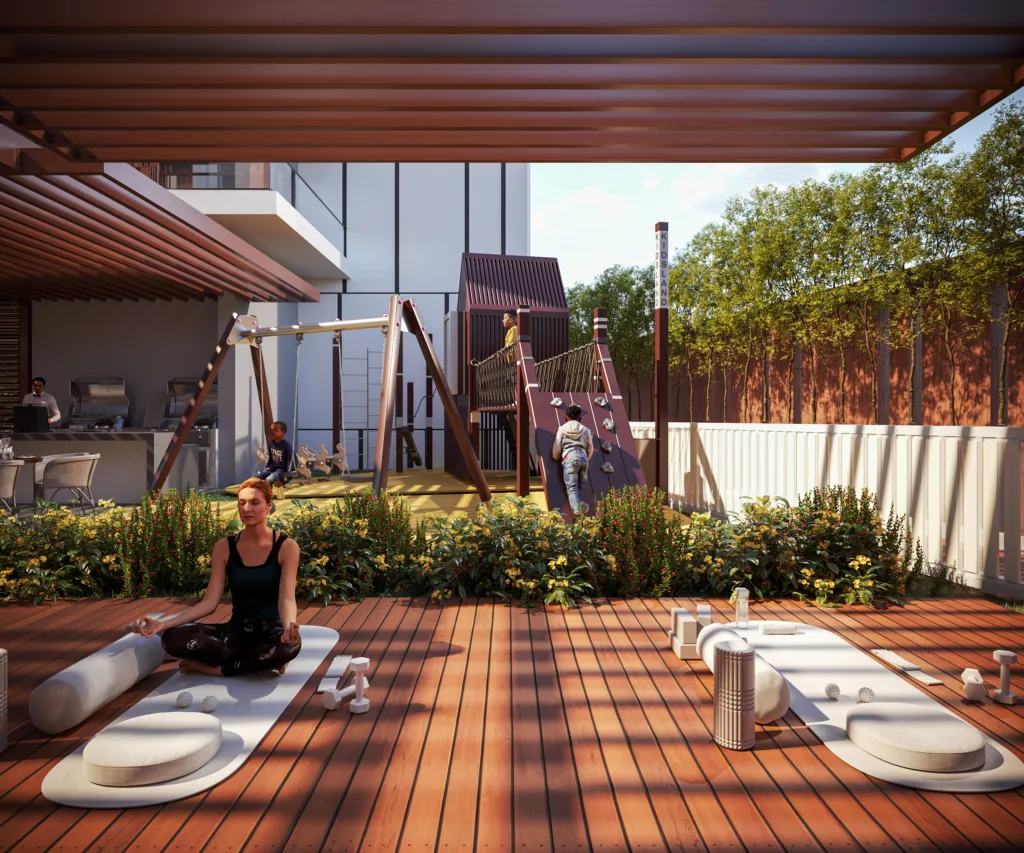
- Wellness facilities beyond basic gym: Yoga rooms, meditation spaces, separate steam and sauna facilities, recovery areas. Comprehensive wellness supporting mental health and stress management.
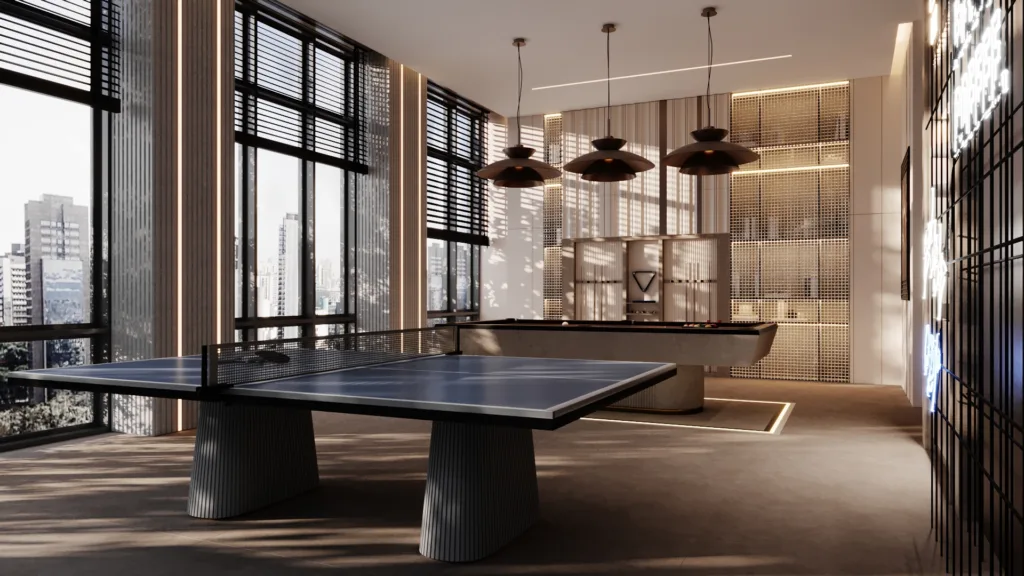
- Entertainment infrastructure eliminating external dependency: Indoor cinema with proper equipment, game rooms with variety, outdoor cinema for unique experiences. Residents shouldn’t need to leave for entertainment.
- Multiple outdoor living zones leveraging climate: Kampala’s year-round temperate climate is competitive advantage. Rooftop gardens, multiple sitting areas, sunset decks, fire pits, BBQ areas. International residents from seasonal climates value this enormously.
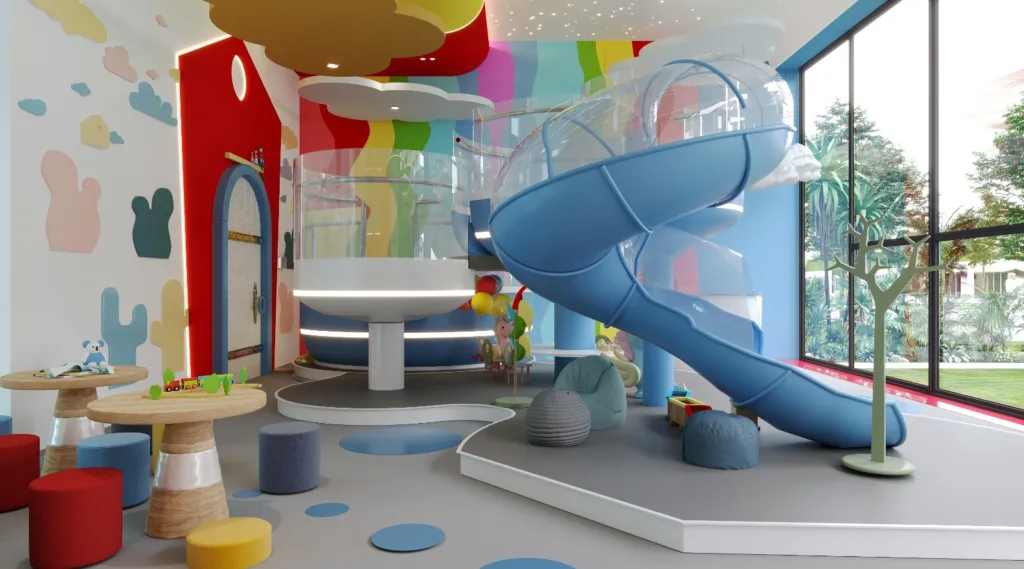
- Family-friendly facilities for visiting family: Even if primary resident has no children, accommodating family visits is crucial for diaspora and international residents maintaining family connections.
Tier 3 – The competitive moat features (where The Bridge operates)
This is where The Bridge operates; amenities so comprehensive they create competitive positioning that others can’t replicate:
- Architectural distinction creating landmark identity: Twin towers with skybridge is psychological positioning – residents live in a Kampala landmark development, not a generic apartment block. This is peak exclusivity.
- Amenity density creating resort-level experience: 25 amenities for constrained unit count means every facility operates at standards impossible in larger developments. No crowding, pristine maintenance, consistent availability.
- Professional management maintaining standards over time: The invisible amenity that determines whether everything else degrades or improves. VAAL’s 24/7 management with dedicated engineers, electricians, and plumbers is infrastructure preserving all other infrastructure.
- Strategic amenity placement creating different experiences: Ground floor gardens for daily use, rooftop facilities for special occasions, skybridge café for elevated socialising. Different elevations create variety impossible in standard configurations.

How Early Buyers Gain the Advantage with the Bridge
When those international buyers started quietly entering Kampala’s market, they set off something market strategists call a “recognition cascade.” That’s just a complex way of saying an opportunity starts small, is noticed by a few people, and then gets pulled into wider and wider networks until everyone seems to be talking about it. The key point is this: by the time official data catches up, the brilliant money has already moved.
This is an illustration of how that typically unfolds:
- Phase 1: A handful of well‑connected, sophisticated buyers uncover an opportunity through their own research or personal travel; they move quietly with no press releases, no headlines.
- Phase 2: People in their circles begin to notice. “Where are you buying in Africa?” “Show me what you saw.” Friends, advisors, and close contacts start to dig in.
- Phase 3 (Right now): The idea spreads through professional channels, like wealth managers, family offices, private bankers. Purchases pick up, still well ahead of institutional radar. It’s talked about at private dinners and investment roundtables, but it’s not yet on Bloomberg or in analyst decks.
- Phase 4: Suddenly you start seeing the trend in the data. Research teams at big firms notice. Institutional capital begins to mobilise. Articles get written, reports get published and markets react.
- Phase 5: Once the broader investment world recognises the opportunity, pricing adjusts. It’s no longer a secret discovery with a discount; it becomes a well‑known value play. The early‑mover advantage begins to fade.
What’s happening in Kampala right now fits this pattern almost exactly. A few informed buyers noticed something others overlooked, a combination of strong occupancy, luxury amenity appeal, and untapped pricing potential. Before the wider world had data to prove it, these buyers acted. That’s why we’re seeing momentum now, with private international wealth leading the way before the institutional wave arrives.
When institutional capital finally arrives – and make no mistake, it will – it targets the best product in the best locations. That’s exactly what The Bridge represents: architectural distinction, a comprehensive amenity package, a prime Kololo address, professional management, and proven pre-sales. It’s the type of development institutional buyers actively seek, and they don’t settle for anything less.
Why Early Investors in The Bridge Capture Maximum Returns
Most importantly, timing matters. Early investors (the ones buying now) benefit from pre-institutional pricing, capturing the full appreciation curve while earning rental income throughout the hold period. They are perfectly positioned to exit alongside institutional interest if they wish.
Mid-phase investors, entering 12 to 18 months from now, face partially recognised pricing, missing the early income period and operating with a smaller margin for error. Late investors, after 24 months, are essentially buying at true market pricing, competing with large buyers and facing compressed returns typical of the broader luxury market.
Property prices in Kampala have steadily grown. The Uganda Residential Property Price Index rose from 108.83 in Q4 2024 to 109.54 in Q1 2025, reflecting 3.8% year-on-year growth. Analysts forecast an 8–12% price increase for 2025, continuing the long-term trend of 5–15% annual appreciation, but these are averages. Developments like The Bridge, which capture the international demographic, tend to appreciate at the top end of that range, far above market averages.
Then there’s the supply reality that most analyses overlook. That 67% pipeline increase, with 1,000+ new units coming online? Almost none of that supply delivers amenity density ratios comparable to The Bridge. Most are standard luxury; good finishes, basic amenities, competing on location and price. Only a handful, maybe three or four developments across Kampala, are truly engineered to serve the “amenity arbitrage” segment: international buyers seeking integrated luxury lifestyles.
The Bridge is one of them, and it has already achieved remarkable pre-sales before significant construction on-ground. This isn’t a good luxury development in an emerging market, this is the optimal positioning in a market transformation that happens once per generation in emerging capitals.
The march to The Bridge isn’t about following trends. It’s about recognising what others haven’t yet: that Kampala’s luxury residential market just created an arbitrage opportunity that won’t exist in 24 months once consensus catches up to reality.
Because the secret everyone missed? It’s not a secret anymore to the people who matter. It’s only a secret to people who haven’t acted yet.
Visit our showhouse at Plot 1 Katonga Road, Nakasero or call +256 765 500 000 to see for yourself what sets The Bridge apart.
