
To start off the year strong, we sat down with a wealth advisor from London who was researching East African markets for his clients. After reviewing Kampala’s property performance data, he looked up from the spreadsheet and asked: “Are these numbers accurate? Because if they are, this completely changes my clients’ Africa allocation strategy.”
We get that reaction a lot from international investors seeing Kampala’s numbers for the first time.
Most people look at property prices like they’re looking at yesterday’s news. They see current values and make decisions based on where prices are today. Smart investors look at property prices as tomorrow’s story, they invest based on where prices are going.
Kampala’s price trajectory tells a story that most markets can only dream about. And if you understand what’s driving these numbers, you’ll understand why we believe Kampala property isn’t just a good investment for the future, it’s arguably the best investment you can make for building long-term wealth.
Let’s dig into the actual performance data and show you exactly why.
The Five-Year Performance Reality.
Kampala property prices showed a total appreciation of 11-15% over the past five years, despite a brief dip in 2022. Let that number sink in for a moment. Total appreciation of 11-15% over five years means your property value increased 11-15% while you owned it, collected rent, and built wealth.
But it gets really interesting: the market recovered strongly in 2024 and early 2025, posting 3.8% year-on-year growth. And reports? They’re suggesting an 8-12% price increase by the end of 2025.
Compare this to what financial advisors in London, New York, or Sydney would tell you. In the UK or US, 3-5% annual appreciation is considered healthy, sustainable growth. In Kampala, you’re looking at double or potentially triple that rate.
We’ve had clients from international markets look at these numbers and literally ask if we made presentation mistakes. Nope. That’s just market performance.
Kampala’s residential property market experienced 3.8% price increase year-over-year as of Q1 2025, demonstrating steady growth despite global economic uncertainties. But these are averages that hide significant variation across property types and locations.
Over the five-year period from 2020 to 2025, Kampala property prices demonstrated consistent annual growth of 5-15%, with prime assets in optimal locations achieving total appreciation of 60-100%. Read that again – prime properties appreciated 60-100% in five years.
This is documented market performance tracked by Knight Frank Uganda and The Africanvestor through actual transaction data. Not projections. Not optimistic forecasts. Actual appreciation on real properties that real investors bought and held.
Understanding the Opportunity Zones
In prime locations like Kololo and Nakasero, luxury apartments and villas range from UGX 600 million to UGX 1.5 billion. That’s a 150% price range within the same prime districts, reflecting quality differentiation rather than just location premiums.
Apartments in high-end areas like Kololo, Nakasero, and Bugolobi can reach US$2,000 per square meter; some of the highest property values in the entire East African region. Meanwhile, residential Kampala averages around $1,111 per square meter.
This price differential creates strategic opportunity. You can position in absolute prime (Kololo, Nakasero) for maximum stability and institutional demand, or target high-growth suburbs like Kira, which leads Kampala’s property growth with remarkable 25-27% price increases in recent periods.
Where Prices Are Heading
Looking ahead to 2026-2027, property analysts expect continued annual increases of 5-12%, fueled by ongoing urbanization and major infrastructure projects. Medium-term projections for Kampala’s property market remain optimistic, with annual appreciation rates expected between 8-15% through 2027-2028.
But long-term projections? Those are particularly bullish.
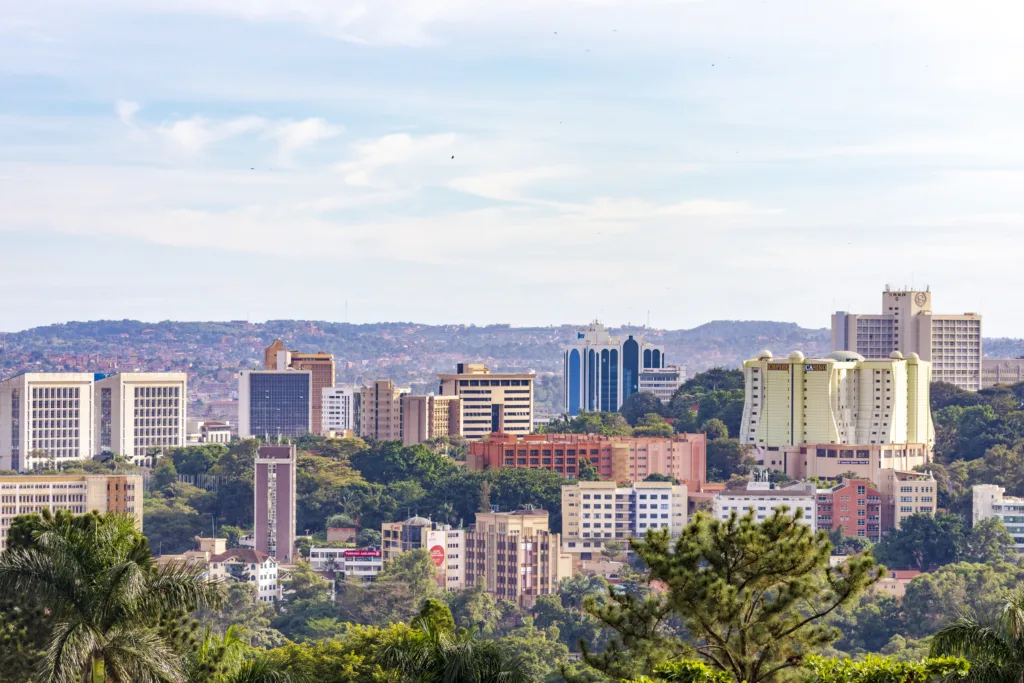
Uganda’s urban population is projected to double by 2035, with Kampala capturing the majority of this growth. Kampala’s population is expected to reach 7 million by 2035, creating sustained housing demand across all market segments.
Think about what that means. Kampala’s current population is around 3.5 million. Doubling to 7 million means adding 3.5 million new residents over the next decade. Every one of those people needs somewhere to live.
This demographic pressure will likely ensure demand continues to outpace supply, especially in central and well-connected suburbs. Areas within 15-20 kilometers of Kampala center, currently priced at UGX 200-400 million, could appreciate to UGX 800 million-1.2 billion by 2035 as urban expansion continues.
That’s 200-300% appreciation potential in well-selected locations over the next decade.
The Rise of Quality Over Quantity
What’s driving Kampala’s property appreciation isn’t just population growth or economic expansion. It’s a fundamental transformation in what’s being built and who’s buying it.
The Shift From Houses to Apartments
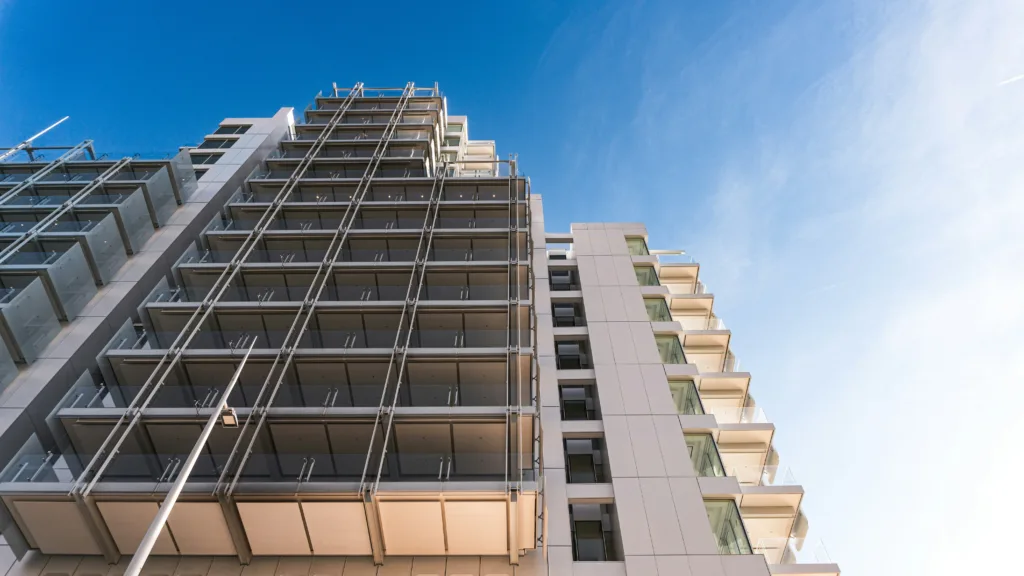
In Nakasero and Kololo, there was a noticeable shift from older detached houses to modern apartment blocks. Developers are increasingly replacing old standalone homes with high-density apartment blocks in areas like Kololo and Nakasero, reflecting both land value optimization and shifting buyer preferences toward community living with shared amenities.
This transformation is economic inevitability. As land values increase in prime areas, low-density standalone houses become economically inefficient. The land underneath a single house in Kololo could support a tower delivering 50-100 residential units, creating massive value multiplication.
And this shift creates appreciation acceleration for early apartment adopters. As the transformation progresses, modern apartment developments become comparables that reset pricing for entire districts.
The Serviced Apartment Explosion
Serviced apartments saw a remarkable 12% increase in demand in 2024, driven by the growing expatriate community and Ugandans living abroad. These properties offer a blend of space, convenience, and high-quality amenities that appeal to international residents.
This 12% demand growth is transformative. When a specific property segment grows demand that fast, it attracts development capital, drives price appreciation, and creates supply constraints as developers struggle to keep pace with demand.
The serviced apartment segment grew by 12% in 2024, particularly in Kololo and Nakasero, driven by expatriate demand and Ugandans living abroad. This concentration in prime areas creates compounding effects – rising demand drives prices up, which justifies more luxury development, which attracts more high-end tenants, which supports even higher prices.
The Quality Development Premium
Pipeline activity in Kampala’s prime residential areas surged by 67%, with over 1,000 new apartment units expected to enter the market within the next 12-24 months. That sounds like oversupply that should moderate prices, right?
Wrong. Because not all supply is equal.
Most of those 1,000 units will be standard apartment blocks—basic finishes, minimal amenities, functional but unremarkable. Very few will be comprehensive luxury developments with international standards, full amenity packages, and professional management.
The difference between professionally managed development with quality finishes, strong security, and comprehensive amenities versus a basic development is often the difference between an 8% annual return and a 25% annual return. Quality developments from established developers should be prioritized not just because they’re nicer—because they perform better financially.
This quality bifurcation protects premium developments from commoditization. Standard apartments compete on price. Quality developments compete on lifestyle delivery and investment performance.
The International Standard Arrival
What’s really changed in Kampala’s residential market over the past five years isn’t just quantity of development, it’s the arrival of international development standards that didn’t exist before.
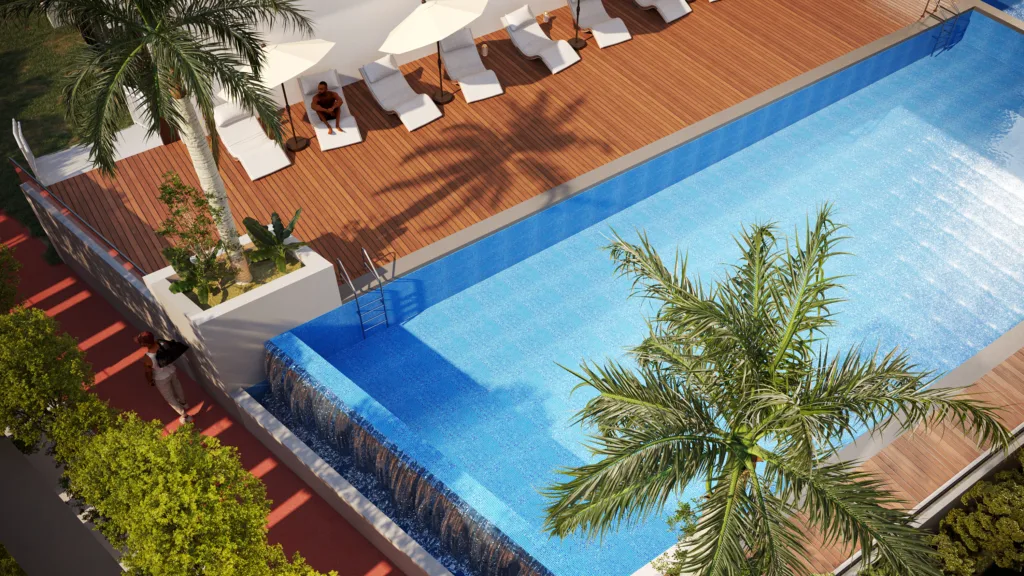
Temperature-controlled pools, smart building technology, comprehensive security systems, professional concierge services, wellness facilities with spa standards – these weren’t available in Kampala residential developments five years ago. Now they’re becoming baseline expectations for luxury segments.
This standards elevation creates opportunity for investors who position in developments delivering international quality. As the market matures and buyers become more sophisticated, the gap between international-standard developments and local-standard developments widens in both price and performance.
What This Means for Your Investment Decision
The data is overwhelming. Historical performance shows 5-15% annual appreciation with prime properties achieving 60-100% over five years. Forward projections suggest 8-15% annual growth through 2027-2028. Demographic fundamentals guarantee sustained demand through 2035 and beyond.
But understanding that Kampala property is a great investment is only the first step. The real question becomes: what’s the right investment timeline, and where exactly should you position your capital to capture these returns?
But the returns aren’t linear, they’re exponential through compounding effects. The wealth-building power of property investment only reveals itself when you understand the different value creation mechanisms operating across different time horizons.
In part two, we’ll break down exactly how long-term property investment builds generational wealth, show you the specific VAAL developments engineered to outperform market averages, and give you the framework for thinking about your own investment timeline and strategy.
The question isn’t whether Kampala property will deliver exceptional returns. The fundamentals make that virtually certain. The question is whether you’ll position correctly to capture those returns.
Visit our showhouse at Plot 1 Katonga Road or call +256 765 500 000 to explore your positioning in wealth generating investment properties.
